
Millions of digital nomads dream of working from Italy—and now, with the introduction of the Digit...


Travel Guides
The Dominican Republic uses Type A and Type B plugs with 110V electricity, the same as the United States. That means US and Canadian travelers can plug in without an adapter, while visitors from the UK, Europe, or Australia will need one to use their devices.

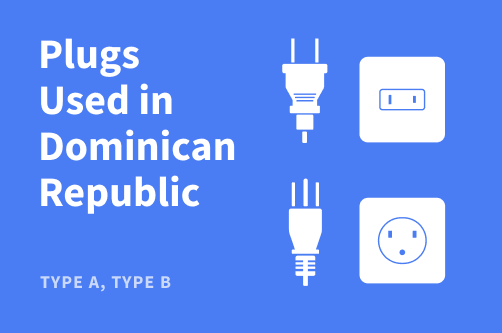
Taking a few minutes to double-check your plug compatibility before you leave can save you from an annoying surprise when you arrive.
It might not seem important while you’re packing, but realizing your charger doesn’t fit the outlet in your hotel room is frustrating, especially if you’re trying to message your driver, check directions, or pull up your reservation details with a nearly dead phone.
The Dominican Republic uses the same outlet types as the United States, so North American travelers usually won’t need an adapter.
In this guide, I’ll explain what power outlets look like in the Dominican Republic, which adapters are most suitable, and the easiest ways to stay connected to mobile internet during your trip.
The Dominican Republic uses two standard plug types throughout the country: Type A and Type B. These are the same plug styles commonly used in the United States and Canada.
If you are traveling from most European countries, the United Kingdom, Australia, or parts of Asia, you will need a plug adapter.
Dominican wall outlets are designed for flat-pin plugs, so round-pin European plug shapes will not fit directly.
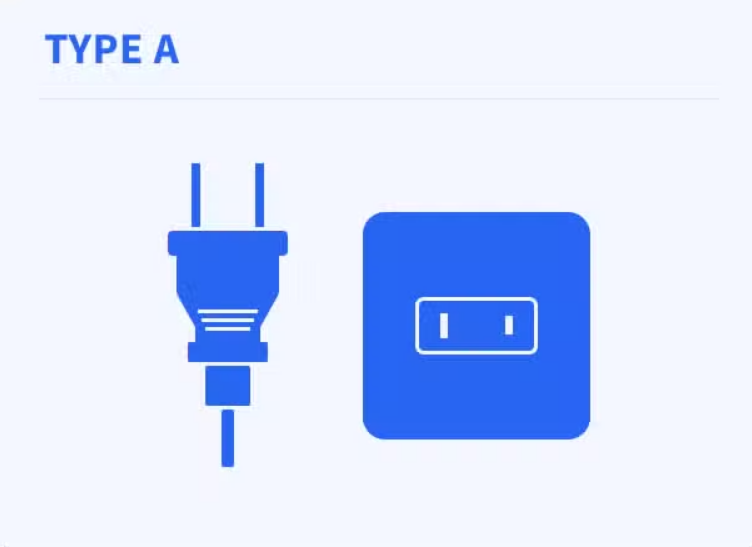
The Type A plug features two flat parallel pins and does not include a grounding connection.
It is typically used for low-power electronics such as phone chargers, tablets, cameras, and small personal devices.
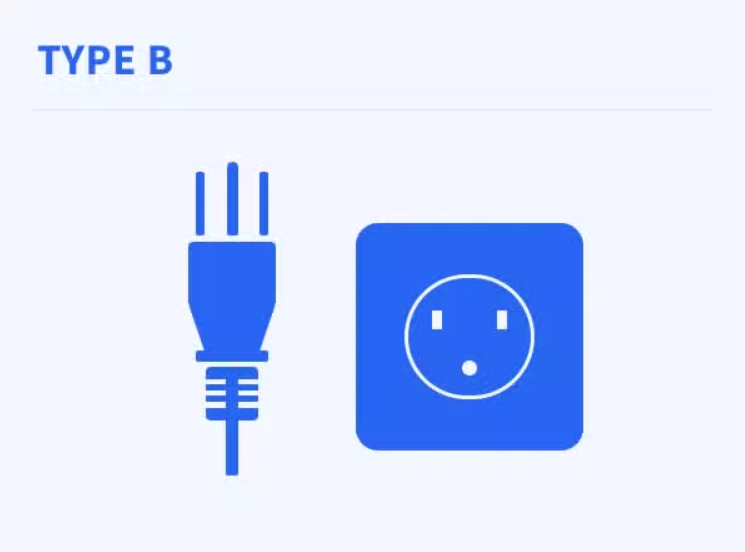
The Type B plug also has two flat parallel pins but includes an additional round grounding pin beneath them for added safety.
This grounded plug type is commonly used for higher-powered devices and appliances.
I personally prefer ordering a plug adapter online before traveling since it is usually more affordable and avoids last-minute inconvenience.
Below are three well-reviewed adapters that work reliably in the Dominican Republic:
This grounded adapter works with Type A and Type B outlets.
It supports electrical connections up to 240 volts but does not convert voltage or current. If your device is not dual voltage, you will need a separate converter.
The adapter accepts both three-pronged grounded plugs and two-pronged appliances, making it suitable for most everyday electronics.
This three-piece adapter kit is compatible with Type A outlets used in the Dominican Republic. It supports connections up to 250 volts and comes with a compact carrying case, making it practical for travel.
The adapter does not convert voltage. If your device is not dual voltage, you will need a separate step-down converter. It is not suitable for high-powered appliances such as hair dryers or curling irons.
Ceptics includes an unconditional lifetime warranty in case of defects or dissatisfaction.
This all-in-one adapter works with outlets in the Dominican Republic and supports plug types from over 160 countries.
It includes one AC socket and four USB ports, three USB-A and one USB-C, allowing you to charge up to five devices at once. The total 5V/5A output and 5V/3A USB-C port are suitable for phones, tablets, and other everyday electronics.
The adapter supports a voltage range of 100V to 250V but does not convert voltage, so your devices must be dual voltage. It also includes built-in safety protections and a resettable fuse.
In most situations, you probably won’t. Most travelers do not need a voltage converter when visiting the Dominican Republic.
The Dominican Republic operates on 110V and 60Hz electricity. This matches the standard used in the United States and Canada.
Most modern electronics are manufactured to handle a broad voltage range automatically. Devices such as smartphones, laptops, tablets, cameras, and power banks often support input ranges between 100V and 240V.
If you’re coming from a country that does not use Type A or Type B plugs, you’ll only need a plug adapter so your device can fit into the local outlets.
There are several dependable ways to stay connected during your visit, and the best option depends on how long you are staying and how much data you expect to use.
Roaming allows you to continue using your home mobile plan while your phone connects to local Dominican networks.
This option requires no setup beyond activating international roaming with your provider.
However, convenience often comes at a higher cost. Major carriers like AT&T, Verizon, and T-Mobile offer international day passes that may cost between $5 and $15 per day. For longer trips, this can become expensive.
An eSIM is a digital SIM card that you install directly on compatible smartphones, eliminating the need for a physical SIM swap.
Activation is usually fast, and many plans begin working shortly after arrival.
Providers such as Holafly offer unlimited data plans if you prefer not to worry about usage limits, while Nomad provides prepaid packages that can be topped up if needed.
For many travelers, eSIM is the most convenient option since it can be arranged before departure.
See also: Best eSIM for the Dominican Republic
If you plan to stay for an extended period, purchasing a local SIM card can be cost-effective.
You can find SIM cards at the airport or in mobile phone stores from companies like Claro and Altice, and you’ll usually need to show your passport for registration.
Pocket WiFi devices act as portable hotspots that allow multiple devices to share one data connection.
They can be useful for families or groups traveling together. However, they require carrying and charging an additional device, and rental costs may be higher than other options.
Electrical outlets vary significantly from country to country. Checking plug type and voltage ahead of time helps prevent inconvenience and ensures your devices charge properly.
Here’s a general overview of common plug types used globally:
| Plug type | Countries/regions where used |
| Type A | United States, Canada, Mexico, Japan, Dominican Republic |
| Type B | United States, Canada, Dominican Republic |
| Type C | Most of Europe, Thailand, Indonesia |
| Type D | India, Nepal |
| Type E | France, Belgium, Poland |
| Type F | Germany, Spain, the Netherlands |
| Type G | United Kingdom, Ireland, Singapore, Hong Kong, UAE |
| Type I | Australia, New Zealand, China, Argentina, Fiji |
| Type J | Switzerland |
| Type K | Denmark |
| Type L | Italy |
| Type M | South Africa |
| Type N | Brazil |
| Type O | Thailand |
If you’re traveling to other countries as part of your trip, it’s worth checking plug compatibility for each destination in advance. You can also read our guides on:
Yes. The Dominican Republic uses Type A and Type B plugs, the same as the United States.
No. The U.K. uses Type G plugs, which are not compatible with Dominican outlets. An adapter is required.
Yes. Canadian plugs are Type A and Type B, which fit Dominican sockets.
The Dominican Republic uses 110 volts and 60 hertz.
Most travelers do not need one. Modern electronics are typically dual voltage and only require a plug adapter if the plug shape differs.
Yes, provided it supports Type A or Type B plugs and is rated for 110V power.
Yes. Adapters are available at airports, electronics stores, and some hotels, though prices may be higher than buying online.
Some accommodations may have adapters available upon request, but availability is not guaranteed. Bringing your own is recommended.

The best global eSIM provider
From $2.3/week
A reliable eSIM provider for budget travelers
From $2.4/week
The best global eSIM provider
From $2.3/week
A reliable eSIM provider for budget travelers
From $2.4/week


Our mission is simple: to make sure you never have to ask, “What’s the WiFi password?” again. All our tips come straight from personal experience — because we’d never recommend something we haven’t put to the test ourselves.
Reviews