
Japan is a country full of surprises, where tradition and innovation collide in the most fascinating...


Travel Guides
Sri Lanka uses Type G plugs (the same three-pin rectangular plug used in the UK) as its official national standard, with 230V electricity at 50Hz. You'll still encounter older Type D and Type M round-pin sockets in some buildings. If you're coming from the US, Canada, or Australia, you'll need a plug adapter. US and Canadian travelers should also check whether their devices need a voltage converter.

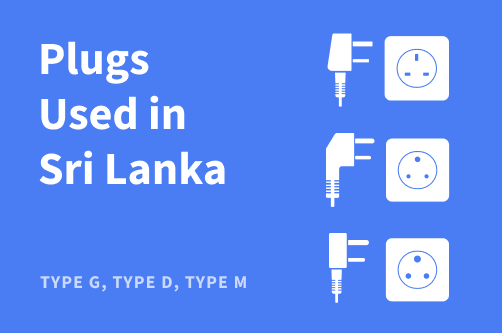
Arriving at Bandaranaike International Airport in Colombo with a flat phone and a US plug that didn't match a single outlet was a fast introduction to Sri Lanka's electrical system.
The country is in the middle of a decades-long transition to a single plug standard, which means you can walk into a hotel room in Kandy and find a British-style three-pin socket on one wall and an old Indian-style round-pin socket on the other. Without the right adapter, you're stuck.
Here's everything you need to know about Sri Lanka's plug types, which adapters to buy, and whether you'll need a voltage converter.
Sri Lanka uses Type G, Type D, and Type M plugs. Type G is the official national standard since 2016, but the country's transition period means you'll encounter all three during your visit.
Here's how each one works and where you're likely to see it.
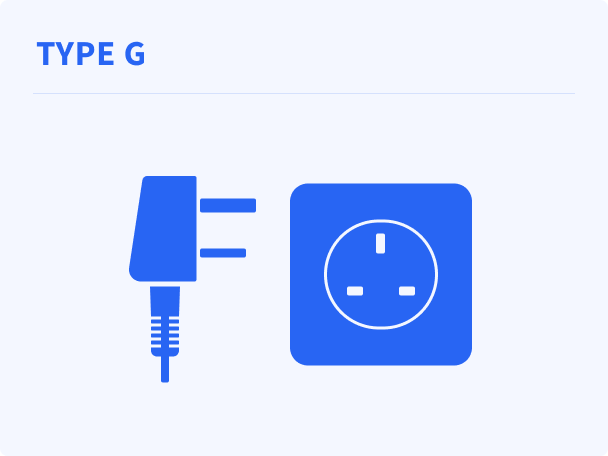
Type G plugs have three rectangular pins arranged in a triangular pattern: two flat pins for live and neutral at the bottom, and a longer earth pin at the top. Every Type G plug contains a built-in fuse, which adds an extra layer of protection that most other plug types lack.
In 2016, the Sri Lankan government officially adopted Type G as the sole national standard for non-industrial use. All new buildings must be wired for Type G sockets. Existing round-pin sockets can remain in use until they wear out or until August 2038, whichever comes first.
This means Type G is now what you'll find in every new hotel, guesthouse, and Airbnb in Sri Lanka. If you've traveled to the UK, Ireland, Singapore, or Malaysia, you've already used this plug. It's the same one.
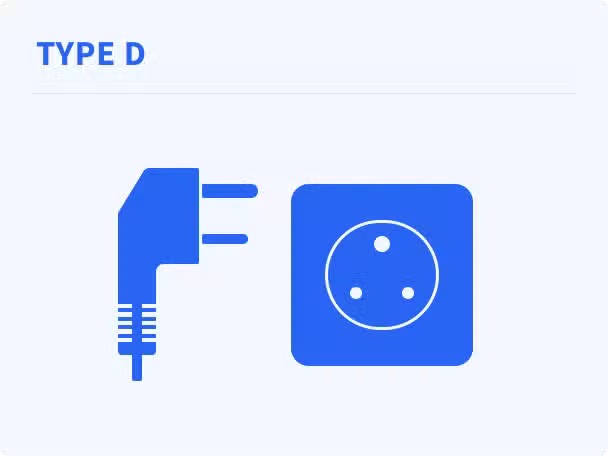
Type D plugs have three round pins arranged in a triangle. The pins are relatively thin (diameter varies, but the standard is around 5.1mm for the earth pin). This is the older British colonial plug that Sri Lanka inherited from its time under British rule, and it's still common in buildings wired before the 2016 standardization.
You'll encounter Type D outlets primarily in older homes and some rural accommodations that haven't been rewired yet. Type D is the same plug still in widespread use across India, Nepal, and parts of Africa. If you've traveled to India, your adapter will also work for Type D outlets in Sri Lanka.
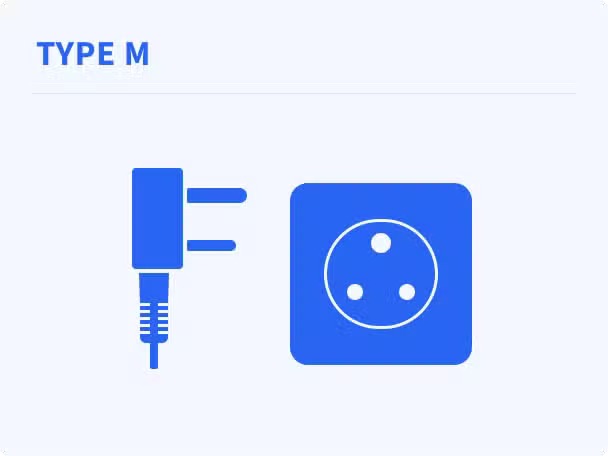
Type M is essentially the bigger sibling of Type D. It also has three round pins in a triangular pattern, but the pins are thicker (the earth pin is about 7.1mm in diameter). Type M was traditionally used for higher-power circuits, like those for air conditioning units and water heaters.
In practice, you're less likely to encounter a Type M socket as a traveler unless you're staying in older Sri Lankan homes or very traditional guesthouses. Type M is still widely used in South Africa and Botswana. A Type D plug will not fit into a Type M socket (and vice versa) because the pin diameters are different.
Buying the right adapter before your flight is the easiest move. Airport shops in Colombo do sell adapters, but the selection is limited and you'll pay a markup.
Electronics shops along Pettah Market in Colombo have every adapter type imaginable at local prices, but navigating Pettah on your first day after a long flight isn't ideal.
Here are the best options to buy online:
The EPICKA covers over 200 countries and includes four USB ports plus an AC socket. For Sri Lanka, it handles Type G sockets and also works with Type D if you run into older outlets.
The retractable pins keep things compact for packing, and the built-in safety shutters prevent accidental shocks. This is the go-to for travelers who want one adapter for everything.
The TESSAN features 65W GaN-powered charging with multiple USB-C and USB-A ports. Ideal for charging a laptop alongside your phone and camera.
It covers 150+ countries and includes overload protection and temperature control. The Type G configuration works perfectly for Sri Lanka's standard sockets.
Ceptics adapters come with Quick Charge 3.0 USB ports and often include a travel pouch. They sell country-specific adapters that are lighter and cheaper than universal ones.
For Sri Lanka, look for their "UK Adapter" which covers Type G outlets. Solid middle-ground option if you don't need a bulky universal adapter.
If you just need a straightforward plug converter with no USB ports or extra features, the Amazon Basics UK-type adapter gets the job done. Lightweight and cheap enough to throw a spare in your bag. Works with Type G sockets throughout Sri Lanka.
Sri Lanka runs on 230V at 50Hz. Whether you need a voltage converter depends entirely on where you're traveling from:
Coming from the US or Canada?
Your country uses 120V. That's a significant voltage difference. However, most modern electronics (smartphones, laptops, tablets, cameras) are dual voltage (100–240V) and don't need a converter. Check your charger's label. If it says "INPUT: 100–240V," you're fine with just an adapter.
But single-voltage devices like older hair dryers, curling irons, or some electric shavers rated only for 120V will be damaged if plugged into Sri Lanka's 230V outlets. Either buy a voltage converter or leave those devices at home and use what your hotel provides.
Coming from the UK, Europe, or Australia?
Your countries use 220–240V, which is compatible with Sri Lanka's 230V. You don't need a voltage converter. UK travelers using Type G plugs won't even need an adapter for the newer sockets. European travelers (Type C or F plugs) and Australian travelers (Type I plugs) will need a plug adapter only.
A note on frequency:
Sri Lanka uses 50Hz. The US and Canada use 60Hz. For most modern electronics, this difference doesn't matter. But some motorized appliances (like older clocks or turntables) designed for 60Hz may run slightly slower on 50Hz power. This is a rare concern for most travelers.
There are four main ways to get internet access in Sri Lanka:
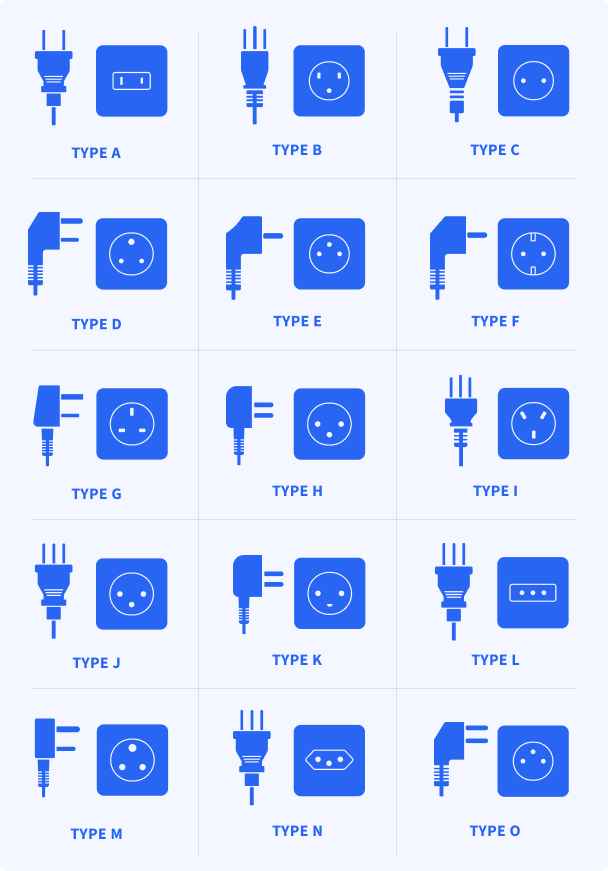
Sri Lanka's situation is unique: it's one of a handful of countries actively transitioning from one plug standard to another. Globally, there are 15 different plug types labeled A through O.
Here's where the major plug types are used:
| Plug type | Countries |
| Type A & B | United States, Canada, Mexico, Japan |
| Type C | Most of Europe, South America, Asia |
| Type D | India, Nepal, Sri Lanka (legacy), some African countries |
| Type E | France, Belgium, Poland |
| Type F | Germany, Netherlands, South Korea, Austria |
| Type G | United Kingdom, Ireland, Singapore, Malaysia, Sri Lanka (official standard) |
| Type H | Palestine, Israel |
| Type I | Australia, New Zealand, China, Argentina |
| Type J | Switzerland, Liechtenstein |
| Type K | Denmark, Greenland |
| Type L | Italy, Chile |
| Type M | South Africa, Lesotho, Sri Lanka (legacy) |
Sri Lanka shares its official plug type (Type G) with the UK, Ireland, Singapore, Malaysia, and much of the Middle East. If you're planning a trip that includes both Colombo and London, or Colombo and Singapore, one adapter covers both.
Planning to visit other Asian destinations? Check out our guides on India plug types, Thailand plug types, and Vietnam plug types.
No. The US uses Type A and Type B plugs with flat prongs. Sri Lanka's official standard is Type G with three rectangular pins (the same as the UK), and older buildings may still have Type D round-pin sockets. Neither is compatible with US plugs. You'll need a plug adapter to charge your devices in Sri Lanka.
Yes, for newer sockets. Sri Lanka's official standard is the Type G plug, which is identical to what's used throughout the UK. If your device has a UK three-pin plug, it will fit directly into any modern Sri Lankan outlet without an adapter.
No. Canada uses the same plugs as the US (Type A and B), which are incompatible with Sri Lanka's Type G outlets. Canadian travelers need a plug adapter and should check if their devices are dual-voltage, since Canada uses 120V while Sri Lanka uses 230V.
Sri Lanka uses 230V at 50Hz. This is compatible with most European, UK, and Australian devices (220–240V) but different from the US and Canada (120V).
Most modern chargers are dual-voltage and work fine, but single-voltage appliances like some hair dryers and curling irons need a converter.
Yes. Apple chargers are dual-voltage (100–240V) and work anywhere in the world. You just need a plug adapter to fit Sri Lanka's Type G outlets. The same applies to MacBook chargers, iPad chargers, and Apple Watch chargers.
Adapters are available at Bandaranaike International Airport convenience stores, electronics shops in Colombo's Pettah Market, and larger supermarkets like Keells and Cargills.

The best global eSIM provider
From $2.3/week
A reliable eSIM provider for budget travelers
From $2.4/week
The best global eSIM provider
From $2.3/week
A reliable eSIM provider for budget travelers
From $2.4/week


Our mission is simple: to make sure you never have to ask, “What’s the WiFi password?” again. All our tips come straight from personal experience — because we’d never recommend something we haven’t put to the test ourselves.
Reviews