
Preparing a trip to Ireland? Then you need to know everything about the eSIM Ireland so you can trav...


eSIM Cards
eSIMs are generally as secure as, or even more secure than, traditional SIM cards. Because they are embedded directly into your device and managed through encrypted carrier systems, they are harder to remove, clone, or misuse.

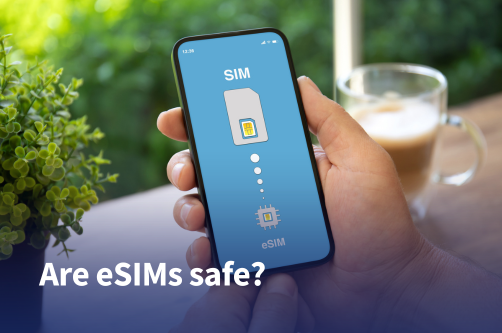
In most cases, eSIMs are considered as secure as or more secure than physical SIM cards. Because the SIM profile is embedded in the device and managed through secure carrier systems, it’s harder to remove, clone or swap than a traditional SIM card. While risks such as phishing or compromised devices still exist, the eSIM technology itself follows strict telecom security standards.
This question has become more common as eSIM adoption continues to grow. More than 1.5 billion devices are expected to support eSIM technology by 2026, reflecting how quickly the digital SIM standard is replacing traditional physical SIM cards. As eSIM use expands, it is important to understand how the technology works, how its security compares with physical SIM cards and what to look for when choosing an eSIM provider.
An eSIM (embedded SIM) is a digital version of a traditional SIM card that is built directly into a device instead of inserted as a removable chip. Users activate a mobile plan by downloading a carrier profile electronically, usually through a QR code or mobile app.
The technology relies on remote SIM provisioning, a secure system that allows mobile networks to deliver and manage SIM profiles over the internet. Once activated, the eSIM connects the device to the carrier’s network the same way a physical SIM does, enabling calls, messages and mobile data.
Because the SIM profile is stored digitally, users can keep multiple carrier plans on one device and switch between them without replacing a physical card. This flexibility is one reason eSIMs have become popular among travelers, dual line users and smaller devices such as smartwatches.
Both eSIMs and physical SIM cards rely on the same telecom authentication standards used by mobile carriers worldwide.
According to the GSMA, eSIM technology provides security comparable to traditional SIM cards through encrypted carrier provisioning and secure network authentication.
The main difference lies in how each SIM can be accessed or manipulated. Physical SIM cards can be removed from a phone and inserted into another device, which can expose them to risks such as theft, cloning or SIM swapping.
By contrast, eSIM profiles are installed digitally and tied to the device’s secure hardware environment. This reduces the risk of physical SIM theft and makes certain attacks, such as removing the SIM and using it in another phone, significantly harder.
| Security factor | eSIM | Physical SIM |
| Physical removal | Embedded in the device and cannot be removed | Removable chip that can be taken out and inserted into another device |
| SIM theft risk | Lower since the SIM cannot be physically stolen | Higher if the SIM card is removed from a lost or stolen phone |
| SIM swapping | Harder to perform physically because the SIM is tied to the device | Easier if attackers gain access to the physical SIM |
| SIM cloning | More difficult due to secure provisioning and encrypted profiles | Possible in rare cases if attackers copy SIM credentials |
| Activation process | Requires digital activation through QR code or carrier app | Activated by inserting the SIM into a device |
| Remote management | Profiles can be added or removed remotely by the carrier | Cannot be managed remotely without replacing the SIM |
| Device switching | Requires transferring or reinstalling the eSIM profile | Simply move the SIM card to another phone |
| Loss or theft scenario | Phone security protects the embedded SIM | Removing the SIM allows immediate use in another device |
| Network authentication | Uses the same carrier authentication and encryption standards | Uses the same carrier authentication and encryption standards |
Verdict: Both technologies rely on the same telecom security standards, but eSIMs offer stronger protection against physical attacks such as SIM theft or card removal. Physical SIM cards remain convenient for quick device switching, but they introduce additional risks if the card is lost, stolen or swapped into another phone.
Not all eSIM providers offer the same level of reliability, coverage or support. Before purchasing a plan, it’s worth checking a few key factors to make sure the service will work smoothly during your trip.
Here are some things to look for when choosing an eSIM provider:
One well-known provider that meets many of these criteria is Holafly, which offers international eSIM plans with broad coverage and unlimited data options in many destinations.
Holafly also provides simple QR-based installation and multilingual customer support, making it a convenient choice for travelers who want a quick setup before departure.
The main risks of eSIM are related to phishing, carrier account takeover or installing a profile from an untrusted provider. Like physical SIM cards, security ultimately depends on your device protection and carrier safeguards.
eSIMs can be harder to transfer between devices because you cannot simply move a card to another phone. Some older devices and carriers also do not support eSIM yet.
eSIM technology itself is highly secure and follows telecom encryption standards. However, attackers could still compromise accounts through phishing, weak passwords or SIM-swap fraud at the carrier level.
Yes, eSIMs are generally safe for travel because they eliminate the need to physically swap SIM cards or visit local shops. They also allow you to activate mobile data quickly while keeping your primary number active.
For many travelers, eSIMs are worth it because they provide instant connectivity without needing a physical SIM card. They are especially convenient for short trips or multi-country travel.
You might avoid eSIM if your phone is carrier locked or does not support the technology. Some users also prefer physical SIM cards because they are easier to move between devices.
Yes, eSIMs are generally safe for international roaming because they use the same carrier authentication and encryption standards as traditional SIM cards. They can also reduce certain risks since the plan is installed digitally rather than requiring physical SIM swaps while traveling.

The best global eSIM provider
From $2.3/week
A reliable eSIM provider for budget travelers
From $2.4/week
The best global eSIM provider
From $2.3/week
A reliable eSIM provider for budget travelers
From $2.4/week


Our mission is simple: to make sure you never have to ask, “What’s the WiFi password?” again. All our tips come straight from personal experience — because we’d never recommend something we haven’t put to the test ourselves.
Reviews