


News
Roaming became almost invisible for travelers inside the European Union, but crossing those borders tells a very different story. If the technology already exists to keep us connected anywhere, why does global roaming still remain so expensive, and could a world with free roaming ever become reality?

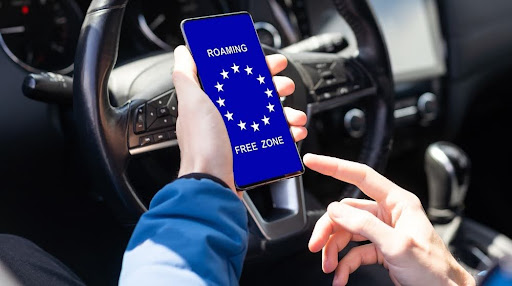
2026. We live in a world where it’s possible to send a message from Barcelona to someone in Kuala Lumpur and chat in real time. The conversation travels halfway across the planet in seconds. But if you and your phone travel that same physical distance, that conversation could end up costing almost as much as your plane ticket. (Sounds exaggerated, but spend two weeks in Malaysia using the internet like nothing matters and then tell me how it goes...)
If technology is clearly prepared for almost everything, including connecting any point on the planet, why is roaming still so expensive? And why does it seem to have only been tamed within the European Union?
First of all: what exactly is roaming?
To explain it quickly and simply, roaming is what happens when your phone connects to another operator’s network because you are outside the country where you purchased your mobile plan.
Your carrier does not have towers in that territory, so when you cross the border, your phone temporarily uses the infrastructure of a local operator so you can continue making calls, sending messages, or using mobile data.
What actually happens is a kind of agreement between networks. Your carrier asks a foreign operator to allow one of its customers to use its infrastructure. That operator agrees, but... surprise: not for free. Every megabyte, call, or text generates a wholesale charge that your carrier has to pay to the operator providing the network.
The system is also much more complex than it appears at first glance. Many operators maintain hundreds of bilateral roaming agreements with companies in other countries, and around 65% of them still rely on these direct agreements to manage the service.
Not too long ago, more than one traveler had a mini heart attack after coming home and opening their mobile bill. For years, roaming was behind the infamous bill shocks: unexpected bills worth thousands of euros after using data abroad. In 2018, for example, a British tourist received a bill of around €4,000 after using roaming during a trip to Kosovo.
Fortunately, everything changed in 2017. That year, the European Union changed the rules of the game with a simple measure: Roam Like At Home. In practice, this means that European citizens, as long as they are traveling within any EU country, can:
But be careful, this does not mean roaming became free. Operators still pay each other for using networks, and these prices are known as wholesale roaming charges. Within the EU, they are regulated by Brussels with maximum limits and fair usage rules.
The idea of regional roaming did not stay only in Europe. In recent years, several economic blocs have tried to replicate the European model, with varying degrees of success. The clearest example is the Western Balkans.
In 2021, Albania, Serbia, Montenegro, North Macedonia, Bosnia and Herzegovina, and Kosovo (that British tourist would have loved this three years earlier) eliminated roaming surcharges between their countries through a regional agreement directly inspired by the European experience.
But it is not the only case. In the Gulf Cooperation Council, which includes countries such as Saudi Arabia, the United Arab Emirates, Qatar, Kuwait, Bahrain, and Oman, efforts have also been made to reduce roaming prices within the bloc. It is not exactly free roaming, but it is considerably cheaper than traveling outside the region.
Something similar is happening in East Africa, where Kenya, Uganda, Rwanda, and South Sudan signed agreements to dramatically reduce roaming costs between their mobile networks to encourage regional mobility and trade.
Latin America has also tried to join the shift. Organizations such as the Andean Community and MERCOSUR have proposed initiatives to reduce regional roaming costs, although progress has been more limited and uneven.
If only a few years ago the European Union and other regions managed to regulate roaming, what happens with the rest of the world?
But regulation ends where EU borders end. And that is where the traveler’s problem begins.
Roaming largely survives thanks to tourism. The numbers help explain it: according to the UN World Tourism Organization (UNWTO), international tourism exceeded 1.5 billion travelers in 2025. And every one of them carried a potential roaming customer in their pocket. The relationship is so direct that when travel collapsed during the pandemic, roaming revenue in many markets dropped between 20% and 30%.
And we cannot pretend money does not play an important role here. According to GSMA Intelligence, international roaming represents between 3% and 6% of global mobile revenues.
Those numbers sound small? Tell that to the French tourist who received a bill for €37,737 after spending one week in Morocco. Pretty wild, right? Keep in mind that the telecommunications sector generates more than a trillion dollars every year. Even a small percentage can become a very profitable business.
But beyond economics, there is also regulation. Internet globalized the world, yes, but telecommunications still operate at a national level. Every country decides what to do with its radio spectrum, grants licenses to operators, and regulates its own market.
As we have seen, the European Union was able to eliminate roaming surcharges because it brought together three conditions that are extremely rare on a global scale:
In other words, Europe functions, at least in telecommunications, as a single mobile market. For something like a global Roam Like At Home system to exist, much more ambitious international agreements would be needed: shared regulation, limits on wholesale charges, and above all, coordination between operators from different countries.
It would be fantastic to have a sort of global European Commission capable of setting limits on international roaming, but for now we can leave that in the realm of traveler utopias.
What is beginning to change is not politics so much as the market. More and more travelers are moving away from traditional roaming and choosing simpler, cheaper alternatives: international eSIMs, global digital operators, public Wi-Fi, or prepaid data packages.
This is not a coincidence. Recent telecommunications industry reports specifically point to eSIMs and global data providers as one of the biggest threats to the traditional roaming model because they allow users to switch operators almost instantly and purchase data without relying on domestic carrier pricing.
In short, they let travelers get mobile data abroad without playing by traditional roaming rules.
At the same time, mobile data usage while traveling continues to grow. In 2026, roaming is no longer mainly about calls and SMS. It revolves around something much more ordinary: WhatsApp, maps, social media, streaming, and video calls.
These new solutions do not eliminate roaming, but they are making it less relevant. And perhaps this is the final irony: international roaming may not disappear because of some massive global regulation, but because the market and travelers themselves finally align and slowly stop using it.
So perhaps we should stop talking about roaming as if it were a technological problem. Hint: it is not.
The technology allowing people to use phones almost anywhere in the world has existed for decades... What does not always exist is the political will to regulate pricing. The European example proves it well: the European Union spent more than ten years eliminating roaming surcharges through intense negotiations and pressure from mobile operator lobbying groups.
So in the end, the rule seems fairly simple: when markets integrate, roaming disappears. When they do not, roaming remains a business.

The best global eSIM provider
From $2.3/week
A reliable eSIM provider for budget travelers
From $2.4/week
The best global eSIM provider
From $2.3/week
A reliable eSIM provider for budget travelers
From $2.4/week
Our mission is simple: to make sure you never have to ask, “What’s the WiFi password?” again. All our tips come straight from personal experience — because we’d never recommend something we haven’t put to the test ourselves.
Reviews