

Knowing how many days to spend in Lisbon can help you make the most of your trip, whether you’re ...


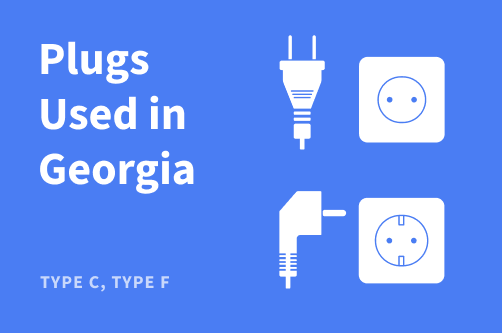
On my first trip to Georgia, I made the mistake of not bringing a plug adapter and quickly realized I could not use my devices. Georgia uses plug types C and F, which are different from those used in the US and the UK, so a plug adapter is a must-have in your travel essentials.
Georgia operates on 220V at a frequency of 50Hz. Most modern devices are dual voltage. If your device has “100 to 240V” in the label, you only need a plug adapter. If it doesn’t, you’ll also need a voltage converter. This guide covers everything you need to know about plug types in Georgia so you can pack the right adapter and avoid any issues during your trip.
Georgia uses plug types C and F with a 220V at a frequency of 50Hz. These plug types are common across many European countries and feature two round pins. Travelers from the US and the UK will need a plug adapter to use their devices in Georgia.
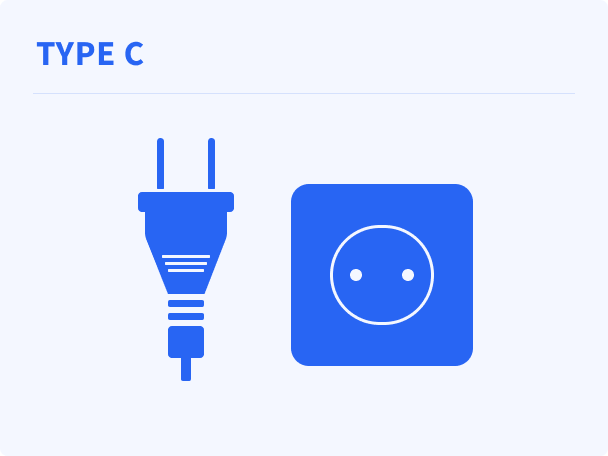
Plug type C is a small plug with two thin, round pins and no grounding. This Georgia plug type is typically used for low-power devices such as phone chargers, cameras, and other small electronics. In Georgia, plug type C is more common on device cables, and it can fit into both type C and type F sockets, which makes it widely compatible.
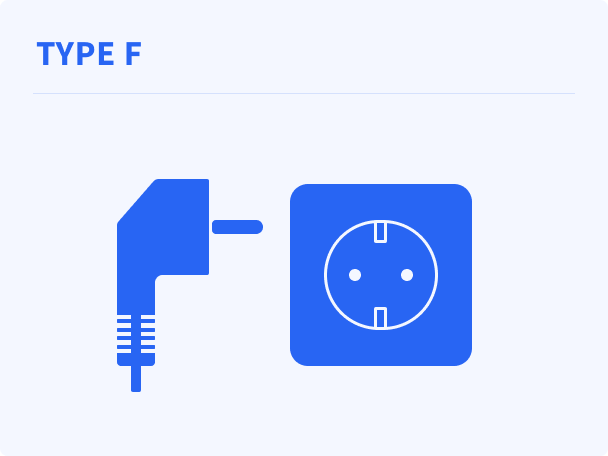
Plug type F is a larger plug with two round pins and side grounding clips. This Georgia plug type is designed for higher-power appliances like laptops, hair dryers, and kitchen equipment, and provides added safety through grounding. In Georgia, plug type F is more commonly used for wall sockets, especially where grounding is required.
If you’re heading to Georgia soon, here are some trusted adapter brands for Georgia plug types.
This compact adapter is a practical choice for US travelers heading to Georgia. It works with plug type C, which uses two round pins, and supports devices rated up to 250V. The build feels sturdy, with reinforced prongs, fire-resistant ABS plastic, and copper components rated to 6 amps.
It comes in several colors and is sold in 2-pack or 6-pack options, which is useful if you are traveling with others or bringing multiple devices. Keep in mind that it is a plug adapter only, so it is not suitable for high-power appliances like irons or hair dryers.
The LW 2-pack UK to EU travel plug adapter converts UK 3-pin (type G) plugs to European 2-pin sockets (types C, E, and F), making it suitable for countries like Georgia. Each adapter is compact and lightweight at 38×40×48 mm, so it’s easy to pack and carry.
This set includes two adapters, which are useful for charging multiple devices at the same time. It also features built-in child safety shutters and a durable ABS construction designed to resist overheating, with a rating of 10A and 240V.
The OREI Europe travel adapter is a compact option that converts American 2- or 3-prong plugs to European Type C sockets, making it suitable for use in Georgia. It features one grounded outlet and two USB ports, so you can charge up to three devices at the same time.
It supports up to 10A and 250V, and is CE and RoHS compliant for safety. Its small, travel-friendly design makes it easy to carry, and it comes with a lifetime limited warranty.
Georgia runs on 220V at 50Hz, so what you need depends on where you’re coming from and what you plan to plug in.
If you’re traveling from the UK or most of Europe, you’re in a good spot. Your devices are already designed for 220 to 240V, so you won’t need a voltage converter. Just bring a plug adapter since Georgia uses types C and F.
If you’re coming from the US, it’s a bit different. US outlets use 120V, so some devices may not be compatible. The good news is that most everyday electronics like phones, laptops, and cameras are dual voltage. Check your charger. If it says “100 to 240V,” you’re fine with just a plug adapter. If it doesn’t, you’ll need a voltage converter or you risk damaging your device.
A quick rule of thumb: Small electronics are usually safe, but high-power items like hair dryers and curling irons often are not.
There are typically four ways to get internet in Georgia: roaming, eSIM, local SIM cards, and pocket WiFi.
Roaming in Georgia: Data roaming lets you use your home carrier abroad by connecting to local networks, but it is usually the most expensive option. US carriers like AT&T roaming and T-Mobile offer passes from $5 to $12 per day.
Georgia eSIM: A Georgia eSIM is a digital SIM you can install instantly without swapping physical cards, making it a hassle-free option with no paperwork required. You can check out providers like Holafly, which is best for unlimited data, and Airalo, which is best for flexible plans.
SIM cards: A local SIM card is a physical card you insert into your phone to access a Georgian network, often at lower rates than roaming. You can buy one at the airport or in city shops from providers like Magti or Silknet, usually with affordable prepaid data plans.
Pocket WiFi: Pocket WiFi is a portable device that creates a personal hotspot, allowing multiple devices to connect at once. It is a good option for groups or heavy users, but it does require carrying and charging an extra device and is often more expensive than a Georgia eSIM.
Know the plug types used in top travel destinations so you can bring the correct adapter. Below is a list of common plug types per destination. Check out the image below the table so you can know what each one looks like.
| Plug Type | Destinations |
| Type A | US, Canada, Mexico, Japan |
| Type B | US, Canada, Honduras |
| Type C | France, Germany, Italy, Spain, Thailand, Iceland |
| Type D | India, Nepal |
| Type E | France, Belgium, Poland |
| Type F | Germany, Netherlands, Spain, Indonesia |
| Type G | UK, Cyprus, Singapore, Hong Kong, Ireland |
| Type H | Israel |
| Type I | Australia, New Zealand, China |
| Type J | Switzerland |
| Type K | Denmark |
| Type L | Italy |
| Type M | South Africa |
| Type N | Brazil |
| Type O | Thailand |
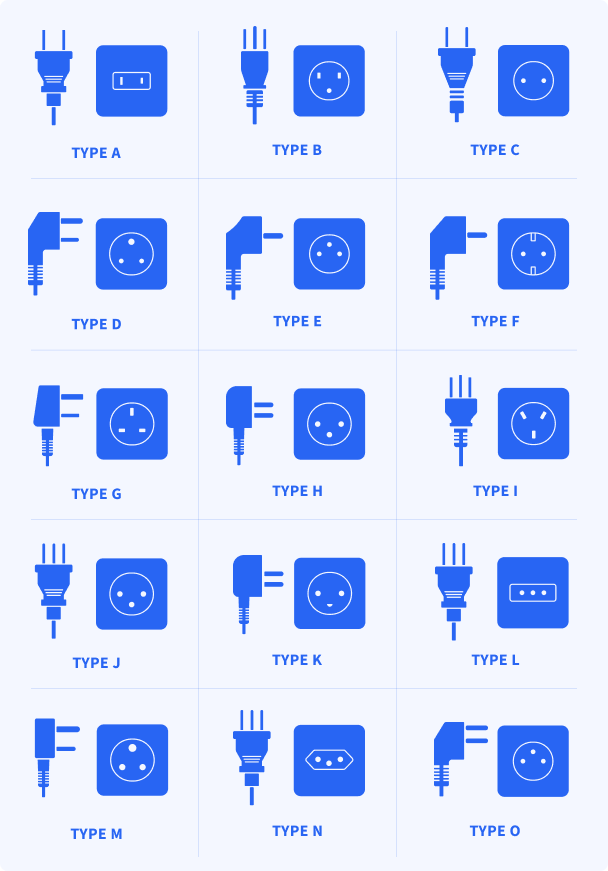
Georgia uses plug types C and F, both with two round pins. Type F sockets are more common in walls, while many devices use type C plugs.
You do not necessarily need a universal adapter, but it can be convenient if you travel often. For Georgia, a simple type C or type F adapter is enough.
No, the US uses plug types A and B, which are different from Georgia plug types C and F. You will need a plug adapter.
No, the UK uses type G plugs. You will need a plug adapter to use your devices in Georgia.
No, Canada also uses types A and B like the US. A plug adapter is required in Georgia.
Georgia operates on 220V at a frequency of 50Hz.
Yes, type C plugs can fit into type F sockets, which is why they are widely compatible in Georgia.
Yes, type C plugs can fit into type J sockets, but type J plugs will not fit into type C sockets.

The best global eSIM provider
From $2.3/week
A reliable eSIM provider for budget travelers
From $2.4/week
The best global eSIM provider
From $2.3/week
A reliable eSIM provider for budget travelers
From $2.4/week


Our mission is simple: to make sure you never have to ask, “What’s the WiFi password?” again. All our tips come straight from personal experience — because we’d never recommend something we haven’t put to the test ourselves.
Reviews