
Planning a trip to Greece? With its stunning landscapes, rich history, and vibrant culture, it's no ...


Travel Guides
Indonesia plug types include Type C and Type F, which differ from US plugs, so travelers from the US need a plug adapter. Learn which adapters work, whether a voltage converter is needed, and how to stay powered during your trip.


From my experience traveling in Indonesia, Indonesia plug types include Type C and Type F, which differ from plugs used in the US, UK, and Canada, so most travelers from those locations will need a plug adapter in their travel essentials.
Also, the country uses 230V / 50Hz power, so while phones and laptops usually work without issue, some devices may require a voltage converter. This guide breaks down what you need to stay powered in Indonesia without overpacking or buying the wrong adapter.
Indonesia uses two plug types: Type C and Type F. Both are common across Europe and parts of Asia, and you’ll see them in hotels, airports, cafes, and residential buildings throughout the country.
The Type C plug has two round pins and no grounding. It’s commonly supported in Indonesia and works well for low-power devices such as phone chargers, cameras, and laptops.
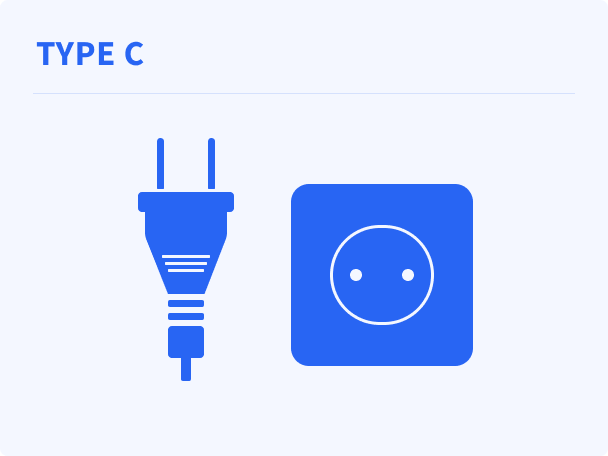
Because Type C plugs fit into Type F outlets, travelers using European-style chargers or adapters can usually plug in without issues.
The Type F plug, also called Schuko, has two round pins with side grounding clips and is designed for higher-power or grounded devices, such as hair dryers or larger electronics.
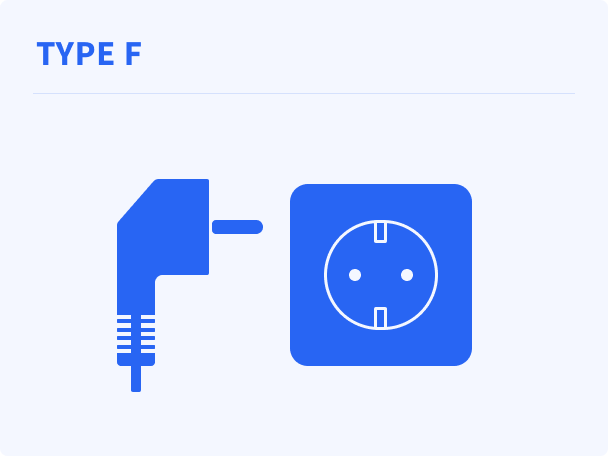
Type F outlets in Indonesia accept both Type F and Type C plugs, which gives travelers flexibility when using different chargers or universal adapters.
If you’re heading to Indonesia soon, here are some trusted adapter brands compatible with Indonesian plug types.
Going In Style offers both non-grounded and grounded adapters, depending on the kit you choose. These adapters are CE-certified, designed to fit polarized plugs, and support connections up to 240 volts.
This makes them suitable for travelers from the US and Europe who need to use their devices with Indonesia’s wall outlets.
TSA Universal adapters feature reinforced prongs, fireproof ABS plastic, and copper components rated up to 6 amps. They support input and output voltages of up to 250 volts and come with a lifetime warranty.
Available in two-pack or six-pack options, these adapters are offered in five colors: black, blue, orange, white, and yellow. The adapter uses two round pins designed for Indonesian outlets and is sold by Vericonic on Amazon.
This Traveladapter extension lead comes with a 1.5-meter cable, making it easier to keep multiple devices within reach. It features a grounded UK Type G plug and four Type G sockets, allowing you to charge or power up to four devices at once.
Rated at 13 amps, the adapter is built to meet CE and UKCA safety standards. It’s sold by Traveladapter Ltd on eBay and currently holds 100% positive reviews.
Indonesia uses a 230V power supply with Type C and Type F plugs (two round pins). In most cases, you do not need a voltage converter, but you will need the correct plug adapter, depending on where you’re traveling from.
If you’re coming from the US or Canada:
You’ll need a plug adapter because North American plugs (Type A or B) don’t fit Indonesian outlets. A voltage converter is not needed for phones, tablets, laptops, and cameras, as these devices usually support 100–240V.
High-power items like hair dryers or curling irons may require a converter or should be left at home.
If you’re coming from the UK:
You’ll need a plug adapter because the UK uses Type G plugs, which are different from those in Indonesia. A voltage converter is not required for most modern electronics, as they are dual voltage.
If you’re coming from most of Europe:
You typically don’t need a plug adapter because many European plugs (Type C) fit directly into Indonesian outlets. A voltage converter is also not necessary for everyday electronics.
If you’re coming from Australia or New Zealand:
You’ll need a plug adapter because these countries use Type I plugs, which don’t match Indonesian sockets. A voltage converter is usually not needed for personal electronics.
Always check your device label for “100–240 V” before plugging it in. If it supports that range, it’s safe to use in Indonesia with the correct adapter.
There are four main ways to get internet in Indonesia: international roaming, eSIMs, local SIM cards, and pocket WiFi. Your choice will depend on your budget, how much data you need, and how long you’re staying in Indonesia.
1. Roaming
Data roaming lets you use your home mobile plan abroad by automatically connecting to local Indonesian networks.
Mint Mobile roaming and Verizon roaming offer international passes for Indonesia, typically costing $5–$12 per day, while Vodafone roaming in the UK starts at around £18 per day. For longer trips, these daily charges can become costly compared to other internet options.
2. eSIM
An eSIM is a digital SIM you install before or after arrival, offering instant activation, no physical card, and, most of the time, no ID requirements. Holafly is best for unlimited data, while Airalo is a popular alternative for travelers who prefer flexible data-based plans.
While you’re at it, check out our guide on the best eSIMs for Indonesia to make the best choice.
3. Local SIM card
Local SIM cards for Indonesia are physical SIMs purchased at airports or mobile shops and usually offer the lowest prices for longer stays. They require passport registration and an IMEI check for phones used over 90 days, which can be inconvenient for short-term visitors.
4. Pocket WiFi
Pocket WiFi is a portable router that connects multiple devices to one data plan, making it useful for groups or families. It’s generally more expensive than eSIMs or SIM cards and requires carrying, charging, and returning the device after your trip (if you rented it).
Below are plug types used in some of the world’s most popular travel destinations. Check the image below the table to see what each plug type looks like.
| Plug Type | Destinations |
| Type A | US, Canada, Mexico, Japan |
| Type B | US, Canada |
| Type C | France, Germany, Italy, Spain, Indonesia, Thailand |
| Type D | India, Nepal |
| Type E | France, Belgium, Poland |
| Type F | Germany, Netherlands, Spain, Indonesia |
| Type G | UK, Ireland, Singapore, Hong Kong |
| Type H | Israel |
| Type I | Australia, New Zealand, China |
| Type J | Switzerland |
| Type K | Denmark |
| Type L | Italy |
| Type M | South Africa |
| Type N | Brazil |
| Type O | Thailand |
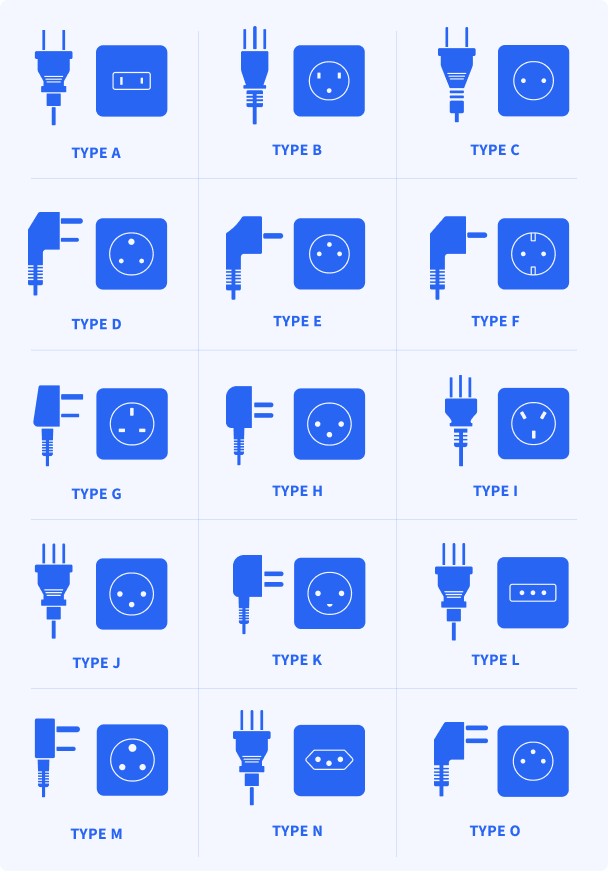
Indonesia uses Type C and Type F plugs. Travelers from the US, UK, Canada, Australia, and New Zealand will need a plug adapter, while many travelers from Europe can plug in directly if they use Type C plugs.
Yes. Type C plugs fit into Type F outlets, which is why many European chargers work in Indonesia without an adapter.
Partially. Indonesia uses Type C and Type F, which are common across much of Europe. However, some European countries also use other plug types (such as Type E or Type L), so compatibility depends on your specific plug.
No. The US uses Type A and Type B plugs, which do not fit Indonesian outlets. Travelers from the US will need a plug adapter.
No. The UK uses Type G plugs, which are different from Indonesia’s Type C and Type F outlets. UK travelers will need a plug adapter.
No. Canada uses Type A and Type B plugs, which are not compatible with Indonesian outlets. Travelers from Canada will need a plug adapter.



Our mission is simple: to make sure you never have to ask, “What’s the WiFi password?” again. All our tips come straight from personal experience — because we’d never recommend something we haven’t put to the test ourselves.
Reviews