


Tokyo’s mix of tech, culture, and top-tier infrastructure makes it a top pick for digital nomads. ...


Wall outlets in Nepal accept Type C, Type D, and Type M plugs, not the flat-pin styles many travelers are used to. Power runs at 230 volts / 50 hertz, which means travelers from the U.S. and Canada will need a plug adapter, and some high-wattage devices may also require a voltage converter. Visitors from the UK, EU, and Australia will also need a plug adapter, but won’t need a converter since the voltage is already compatible.
Nepal uses three different plug types. Depending on where you stay, such as hotels, guesthouses, or older buildings, you may encounter any of the following sockets, sometimes even within the same room.
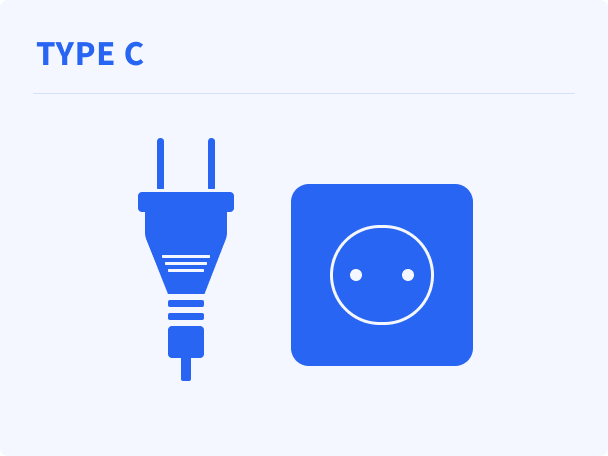
Type C has two round pins and no grounding pin. It’s slim and lightweight and is commonly used for phones, laptops, and other low-power electronics. This plug type is widespread across Europe and parts of Asia, so many international chargers already support it.

Type D features three round pins arranged in a triangle, with a larger top pin for grounding. It’s most commonly associated with plug types used in India and neighboring countries and is often found in older buildings and traditional accommodations in Nepal.

Type M also has three round pins, but they’re much larger and thicker than Type D pins. This plug is typically used for high-power appliances and is less common than Type C or D, though it still appears in some hotels and newer installations.
Buying a plug adapter for Nepal can be done online before your trip or locally after arrival. In Kathmandu, adapters are commonly sold at electronics shops, large supermarkets, and the major airport, but availability and compatibility can vary, especially outside the city.
Here are some Nepal plug adapters you can buy on Amazon.
A compact plug adapter designed for travelers using U.S. devices in Type D plug countries, including Nepal. It accepts standard North American 2- and 3-prong flat-pin plugs, including polarized plugs, with a secure fit. Ultra-light and pocket-sized, it’s suitable for dual-voltage devices like phones, laptops, tablets, and chargers.
Price: $11.99 (3-pack)
A universal plug adapter with detachable attachments for Type A, C, G, D, I, and M plugs, making it compatible with outlets in Nepal and most destinations worldwide. It converts one socket into two U.S. outlets and three USB ports (including two USB-C), allowing you to charge up to five devices at once, and its compact design makes it easy to pack. This adapter is intended for dual-voltage electronics only and does not convert voltage.
Price: $35.99
A Type D plug adapter designed for use in Nepal, India, and the Maldives, with two U.S. inputs that accept standard 2- or 3-prong flat-pin plugs, including polarized plugs. Compact and lightweight, it’s suitable for dual-voltage devices like phones, laptops, camera chargers, and CPAP machines, with a 10A / 250V rating.
Price: $9.99 (3-pack)
A Type D plug adapter designed for travel to Nepal, India, Maldives, and other compatible countries, with three U.S. outlets and four USB ports (including two USB-C). It lets you charge up to seven devices at once and includes a 5-foot extension cord, which is useful in hotels, dorms, and cruise cabins where outlets are limited. The compact, lightweight design makes it easy to pack for travel with phones, laptops, tablets, and other everyday electronics.
Price: $20.99
A Type D plug adapter compatible with Nepal, India, Bangladesh, Maldives, Pakistan, and other destinations, featuring three U.S. outlets and four USB ports, including two USB-C. It allows you to charge up to five devices at once with fast USB-C and USB-A charging, making it suitable for phones, tablets, power banks, and laptops. Compact and lightweight, it’s designed for travel and cruise use where space and outlet access are limited.
Price: $9.99
Nepal operates on 230V at 50Hz, so whether you need a voltage converter depends on where you’re coming from and what you’re plugging in.
When in doubt, pack a plug adapter and avoid bringing high-wattage appliances unless they are clearly rated for 230V.
Here are four ways to get internet access in Nepal.
Roaming lets you use your existing mobile plan abroad by automatically connecting to local networks. Major U.S. carriers like AT&T and Verizon support roaming in Nepal, but costs are high and often run around $10 per day unless you’re on a premium international plan.
An eSIM is a digital SIM you activate by scanning a QR code, offering instant activation, no physical SIM, and no paperwork. If you want seamless, unlimited data, Holafly is your best option. If you prefer data plans priced per GB, Jetpac may be a better choice.
A local SIM card gives you access to Nepali mobile networks and is usually the most affordable option for longer stays. Providers like Ncell and Nepal Telecom offer prepaid SIM cards, though you’ll typically need your passport for registration.
Pocket WiFi devices are portable routers that connect to local networks and share internet with multiple devices. Services like Namaste Wi-Fi by Nepal Telecom provide dedicated WiFi plans that can be useful for groups or travelers staying in one place for an extended period.
The plug types used in Nepal exist within a much broader global system of electrical standards.
While Nepal relies on Type C, Type D, and Type M plugs, other countries use different pin shapes and grounding methods, which is why chargers often stop working when you cross borders.
Comparing Nepal’s outlets with those used worldwide makes it easier to understand when a plug adapter is required.
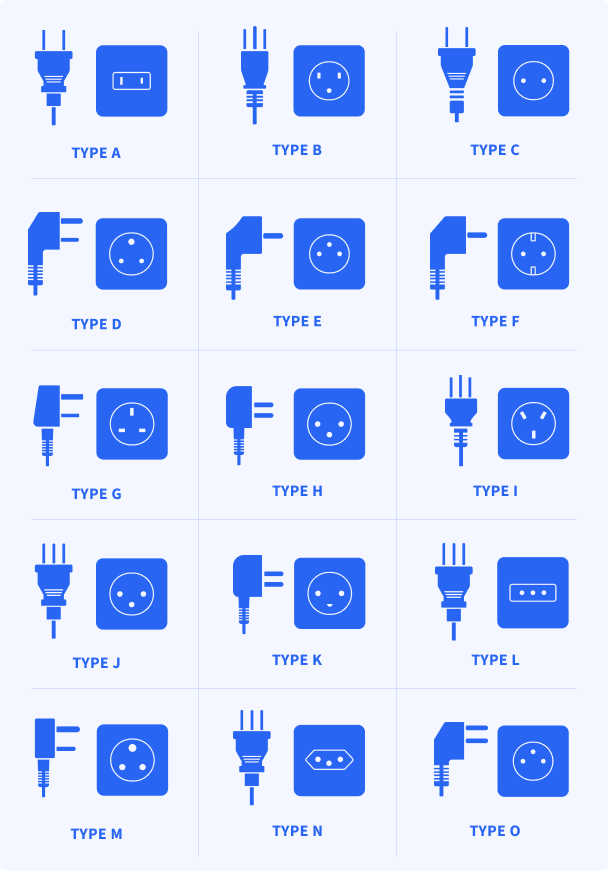
Because Nepal uses Type C, Type D, and Type M, travelers arriving from countries that rely on flat-pin or angled-pin plugs will need a plug adapter. Understanding how these systems differ helps prevent charging issues and makes it easier to pack the right travel accessories before your trip.
Nepal uses Type C, Type D, and Type M plugs. Travelers may encounter more than one socket type depending on the building, so a universal or Type D–compatible adapter is recommended.
Nepal operates on 230V at 50Hz, not 120V. Devices that are not dual voltage (100–240V) may require a voltage converter to avoid damage.
No, Nepal does not use the same plugs as the U.S. American Type A and Type B flat-pin plugs will not fit Nepali sockets without a plug adapter.
No, the UK uses Type G plugs with three rectangular pins, which are not compatible with Nepali outlets. Travelers from the UK will need a plug adapter, though the voltage is already compatible.
No, Canada uses Type A and Type B plugs, which are different from Nepal’s plug types. Canadian travelers will need a plug adapter and should also check voltage compatibility for high-wattage devices.

The best global eSIM provider
From $2.3/week
A reliable eSIM provider for budget travelers
From $2.4/week
The best global eSIM provider
From $2.3/week
A reliable eSIM provider for budget travelers
From $2.4/week


Our mission is simple: to make sure you never have to ask, “What’s the WiFi password?” again. All our tips come straight from personal experience — because we’d never recommend something we haven’t put to the test ourselves.
Reviews