


Mobile Internet
Staying connected in Tokyo makes travel and planning much easier. Pocket WiFi from Japan Wireless is one of the most reliable options for groups who want to share a single connection. For solo trips, however, using an eSIM like Holafly often ends up being simpler and more convenient.


I have used a Pocket WiFi device in Japan on previous trips, especially when I wanted to be online without interruptions all day. It was reliable and did what I needed at the time. There was no need to worry about whether my phone would work on local networks, and having one connection available at all times felt reassuring while moving between cities.
Being able to share data across several devices is useful, and it avoids any concerns about phone compatibility or setup. Pocket WiFi can make sense when traveling in a group. But after testing more options, I usually find eSIMs to be the better choice, especially for solo trips where simplicity matters more.
When I travel in Tokyo with friends, having a reliable Pocket WiFi makes moving around and staying connected much easier. From my research, each provider has its pros and cons depending on data needs, pickup locations, and how long you plan to use it.
Practical details like battery life and return procedures are also important. Some devices need frequent charging, and returning them incorrectly can result in extra fees. These small logistics can influence which provider I choose for a stress-free trip.
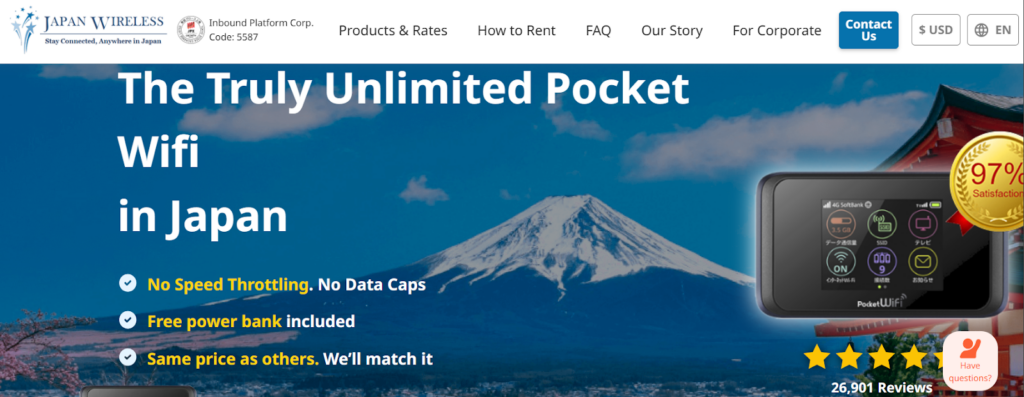
Japan Wireless is one of the most established pocket WiFi providers covering Tokyo and other parts of Japan. The service offers truly unlimited data with no speed throttling or caps, and devices can connect multiple phones, tablets, or laptops at the same time. A free power bank is included to help extend battery life while out exploring during the day.
NINJA WiFi is a pocket WiFi rental service that offers a variety of plans with different daily data limits to suit different needs, including unlimited and capped options. Their service is widely available for pickup at major airports and counters around Japan, and delivery to hotels is also offered, making it flexible for many travelers.
Sakura Mobile offers pocket WiFi rentals for travelers in Japan with plans designed around unlimited daily data and wide network coverage using Japan’s major LTE networks. Rental devices arrive ready to use with no setup required, and they can support multiple devices at the same time..
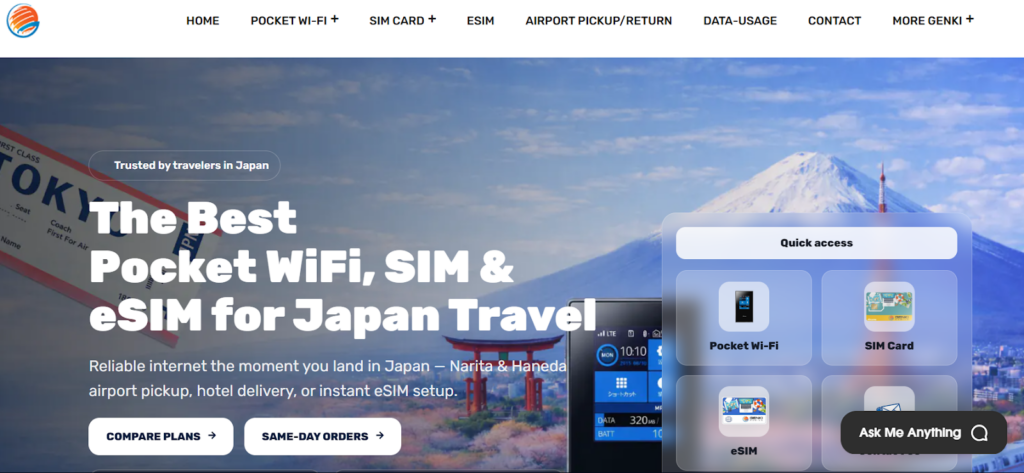
Genki Mobile offers pocket WiFi plans aimed at travelers in Japan with daily data caps and a straightforward pricing structure. Their options include both short‑term and long‑term rentals with different daily allowances, and each plan includes a portable battery to help keep the device powered through a full day out.
Mobal Japan offers a pocket WiFi option that functions a bit differently from typical short‑term rentals. Instead of a pure rental, you purchase the WiFi device and then choose a monthly data plan, which makes it more like a service you keep for longer stays. Coverage is broad across Japan’s major mobile networks, and the device can connect multiple gadgets.
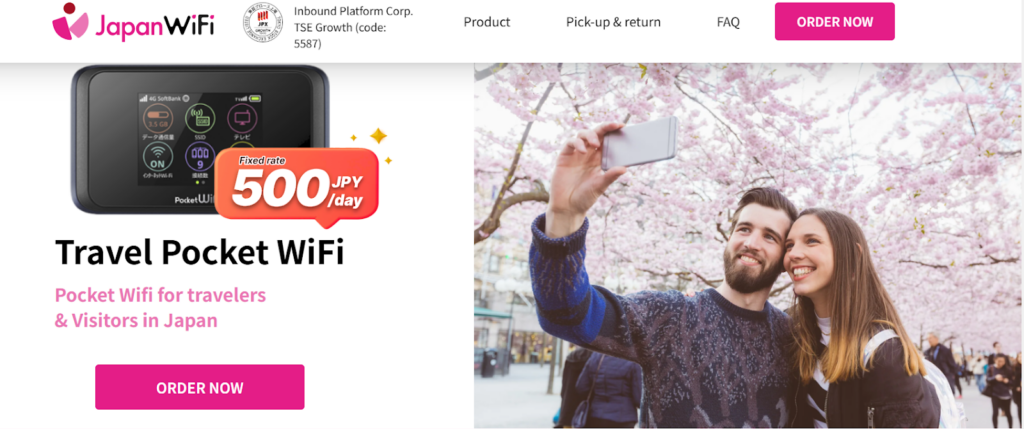
Japan WiFi is a Japan‑based pocket WiFi rental service offering simple, unlimited internet for travelers. The plan uses a SoftBank 4G network with nationwide coverage. A free power bank and accessory kit help keep the device charged. Pickup and return are straightforward, making it convenient for travelers who want minimal hassle.
Many travelers start looking beyond pocket WiFi once they realize how inconvenient an extra device can be. eSIMs remove that hassle, with no battery to manage and internet access that works as soon as you arrive.
The options below were chosen based on real-world use and dependable performance rather than marketing promises.
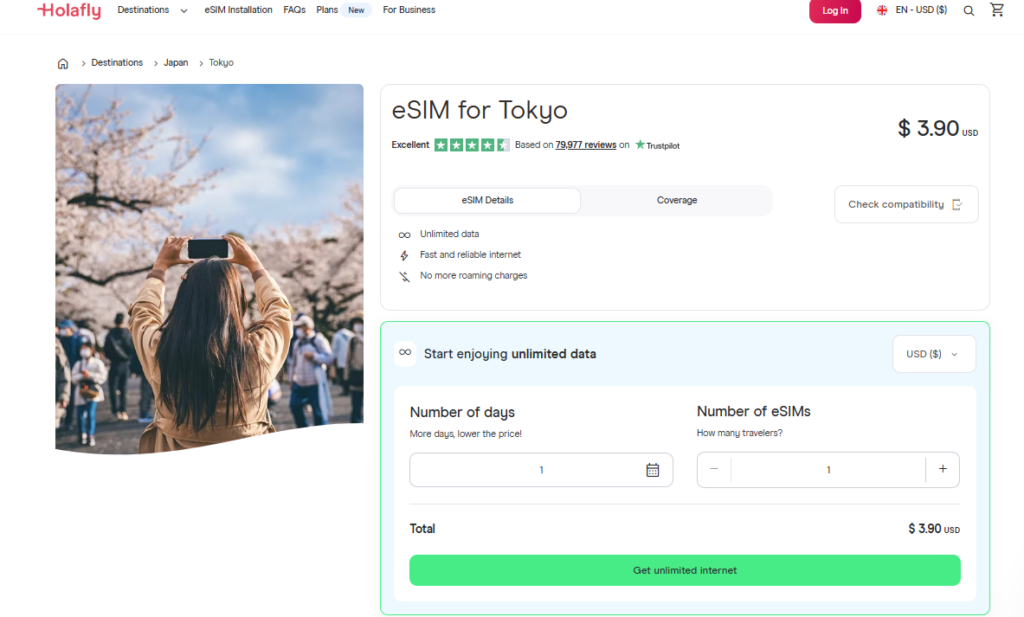
Holafly offers a digital eSIM plan for travelers visiting Japan. It provides unlimited data without the need for extra devices. Plans are flexible and depend on how long your trip lasts. The eSIM is delivered instantly by email. Clear instructions make installation easy. It works on compatible smartphones and doesn’t require a physical SIM card.
Airalo provides a range of prepaid eSIM data plans for travelers heading to Japan. You can choose data packages that match your trip length and usage. Plans include smaller packages as well as larger ones and can be managed directly in the app. Installation is digital and quick, making it a popular choice for its ease of use and flexible options.
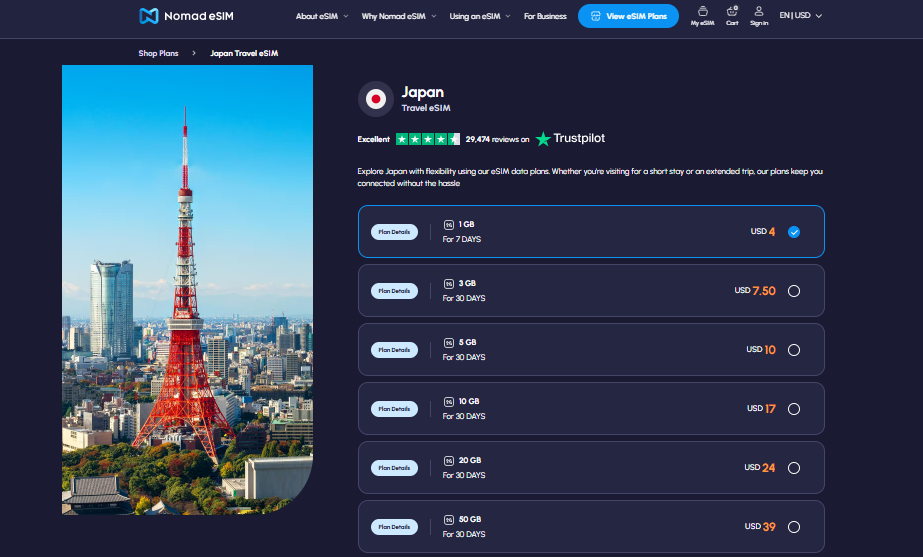
Nomad offers a Japan‑specific eSIM with flexible data plans for short or longer trips. Options range from small data amounts to unlimited plans for heavier use. The eSIM connects to local 4G and 5G networks for broad coverage in Tokyo and other cities. Activation is instant after purchase.
Pocket WiFi can be convenient for travelers in groups or those who need to share data across multiple devices. It ensures reliable connectivity without worrying about phone compatibility. For solo travelers, however, eSIMs are often simpler and more practical.
Carrying an extra device adds weight and requires charging. Returns can be tricky if you forget to drop it off or lose the prepaid envelope. Battery life may limit use throughout the day, and late returns can incur extra fees.
Most providers charge a replacement fee if a device is lost or damaged. The exact cost depends on the rental company, so it’s important to check terms before renting. Some providers also offer optional insurance for peace of mind.
Daily rental prices usually range from $2–$5 per day for basic plans. Some providers offer higher-data or unlimited plans that can cost around $10 per day. Long-term rentals may reduce the daily average cost.
Providers like Japan Wireless, NINJA WiFi, Sakura Mobile, Genki Mobile, Mobal Japan, and Japan WiFi are reliable options. Choice depends on coverage, battery life, and ease of pickup/return.
For solo travelers, an eSIM or physical SIM is often easier and more convenient. Pocket WiFi can make sense for groups or when you want to share one connection across devices. It really depends on your travel style and data needs.

Our mission is simple: to make sure you never have to ask, “What’s the WiFi password?” again. All our tips come straight from personal experience — because we’d never recommend something we haven’t put to the test ourselves.
Reviews