


News
Project Suncatcher, announced by Google last November, has gained fresh momentum with the backing of Musk’s company. Together, they could create a network of solar-powered satellites equipped with artificial intelligence chips. But would anything really change for everyday users?

Managing the data used by artificial intelligence models requires highly demanding infrastructure. In the United States alone in 2023, data centers consumed 64 billion liters of water just for cooling and 4.4% of the country’s total electricity. Artificial intelligence needs more and more energy, water, and land. It is a cost that will only continue to grow, and one that is already being borne by communities living near these facilities.
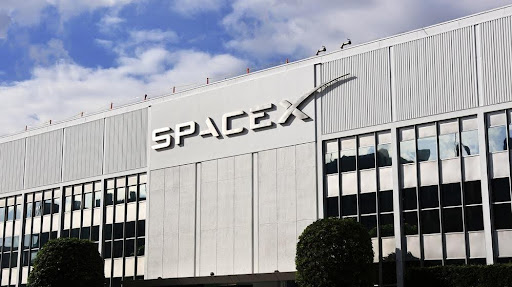
Earth cannot sustain this pace of growth. Google knows it, and it is already looking up. Literally. The company is in talks with SpaceX, Elon Musk’s aerospace company, to send data centers into space and power the next generation of AI.
The idea sounds like something out of science fiction, but it is already starting to take shape. According to several reports published this week, Google is negotiating agreements with SpaceX and other aerospace providers to deploy orbital servers capable of processing information beyond Earth. So how could this affect us, ordinary mortals and users of these technologies?
The rise of artificial intelligence has sharply increased the energy consumption of traditional data centers. Training AI models requires huge amounts of electricity, cooling systems, and physical space, creating economic, environmental, and even humanitarian problems.
In this context, space is emerging as an alternative. In orbit, satellites could be powered by near-constant solar energy and use the vacuum of space to cool their systems more efficiently. That could reduce some of the costs involved in running massive land-based data processing centers.
In this scenario, SpaceX looks like the ideal partner. The company has extensive experience with low-Earth-orbit satellite systems through its Starlink satellite internet service, along with the cost advantages of its reusable rockets. These advances are precisely what make Google’s project viable, bringing launch and operating costs down to levels that seemed out of reach just a few years ago.
As both companies continue developing the project, Google already plans to launch two prototype satellites with Planet Labs in early 2027, in what would be the first real test of its ambitious space-based data infrastructure.
Although space-based data centers still seem like a distant idea, they could change how many of the digital tools we use every day actually work. Artificial intelligence services, cloud storage, automatic translation, video calls, GPS navigation, and even mobile apps could depend, at least in part, on infrastructure located beyond Earth.
Although Google and SpaceX’s plan is mainly aimed at solving an economic problem for both companies, it could also bring positive effects for the environment and life on Earth.
Placing data centers in space could reduce some of the enormous electricity and water consumption that traditional servers require today. In practice, this would ease pressure on terrestrial power grids, which are under growing strain from the rapid growth of artificial intelligence and digital services.
In addition, these systems could use the conditions of space to cool far more efficiently, avoiding the use of billions of liters of water currently needed to cool data centers in different parts of the world.

The best global eSIM provider
From $2.3/week
A reliable eSIM provider for budget travelers
From $2.4/week
The best global eSIM provider
From $2.3/week
A reliable eSIM provider for budget travelers
From $2.4/week
Our mission is simple: to make sure you never have to ask, “What’s the WiFi password?” again. All our tips come straight from personal experience — because we’d never recommend something we haven’t put to the test ourselves.
Reviews