

News
One of the world’s most remote and exclusive destinations is preparing for a historic shift: in 2029, Bhutan will open an international airport that could change how travelers reach and experience this small Himalayan kingdom.

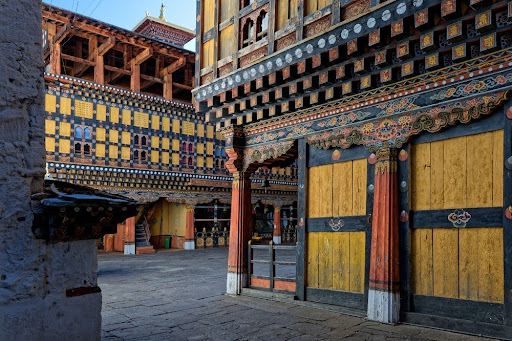
Bhutan, a country still unfamiliar to many travelers, lies in the Himalayas between India and China. It does not measure its wealth by GDP, but by Gross National Happiness, an indicator that takes into account people’s wellbeing, environmental protection and cultural preservation. This is not just a symbolic idea: the philosophy guides many of the country’s decisions, including those related to tourism.
This small Himalayan kingdom receives barely 200,000 tourists a year. Not because of a lack of interest, but because until now it has had only one international airport: Paro, located in a narrow valley surrounded by mountains more than 5,000 meters high.
But that is about to change. The country is already working on the new Gelephu International Airport, an ambitious project scheduled to open in 2029 that could completely redefine travel to one of the most inaccessible destinations on the planet.
Traveling to Bhutan is not like planning a quick trip to just any other country in Asia. Here, finding a cheap flight and simply turning up is not an option. The country’s entire model is designed to prevent that.
For decades, Bhutan has followed a policy known as “High Value, Low Volume.” The goal is clear: to avoid mass tourism and protect both its culture and its natural environment. In fact, the country did not open to tourism until 1974, and it has done so with many restrictions ever since.
One of the main obstacles has always been the cost. Until a few years ago, travelers were required to book fixed tour packages that included accommodation, a guide, transport and meals, with a minimum cost of between 200 and 250 dollars per day.
Today, the system has changed, but it remains demanding: a sustainable development fee of around 100 dollars per person per night currently applies, on top of flights, hotels and all other expenses.
Today, Bhutan has one main international airport: Paro. And landing there is anything but easy. Located more than 2,200 meters above sea level and surrounded by mountains reaching up to 5,500 meters, it is considered one of the most challenging airports in the world. Aircraft have to maneuver through narrow valleys and make extremely precise turns, all without radar assistance. In fact, fewer than 50 pilots in the world are certified to operate at this airport.
Connectivity is also very limited. Only a couple of airlines operate there (Drukair and Bhutan Airlines), and the number of daily flights is low. This means most international travelers have to make several connections, usually in Delhi, Bangkok or Kathmandu, before arriving.
The change begins in the south of the country, in an area that is still less familiar to travelers: Gelephu. This is where Bhutan is building its major new project: Gelephu International Airport, scheduled to open in 2029.
The project stands out for a design that blends contemporary architecture with local tradition. The terminal will be built mainly from Bhutanese timber, with carved structures that evoke Himalayan landscapes and also help regulate ambient humidity naturally.
But the most striking aspect is its approach: the airport will include spaces for yoga, meditation and even gong baths. It is a way of bringing the country’s wellbeing-based philosophy even into infrastructure as functional as an airport.
Operationally, the change will be radical. While Paro Airport receives only a few flights a day (and the world is starting to cancel flights and routes due to the oil crisis), Gelephu is designed to handle up to 123 flights a day, which would make it the country’s main entry point.
Its location also works in its favor. Unlike Paro, Gelephu will be built in a lower and more accessible area, close to the border with India. This should allow for simpler operations, more international routes and, overall, much more direct access to Bhutan.
But the airport is not arriving alone. It is part of a much more ambitious project: Gelephu Mindfulness City, a new city promoted by the King of Bhutan that aims to turn this region into an international hub where investment, sustainability and wellbeing coexist.
The idea is not only to attract tourists, but also companies and global talent, creating a new economic hub within the country. At the same time, it will help redistribute tourism toward the south, a far wilder, more biodiverse and less explored region than the classic western circuit.
Until now, most travelers followed a fairly fixed itinerary: Paro, Thimphu, Punakha or Bumthang. With the opening of Gelephu, the country wants to redirect part of its tourism toward the south, a much wilder, subtropical and more biodiverse region.
Here, the landscape changes completely. Jungles, rivers, national parks and wildlife that is hard to see in other parts of the world (elephants, tigers and rhinos) make this area a very different alternative to the more classic Bhutan experience. Places such as Royal Manas National Park, one of the oldest in the country, could begin to gain greater prominence.
That said, this does not mean Bhutan is going to open up to mass tourism, but rather to sustainable tourism in line with its policies. The country has made it clear that it will maintain its controlled growth model. The sustainable development fee will remain in place, and the approach will stay the same: attracting fewer travelers, but with greater economic impact and less pressure on the environment.
In fact, the new airport is part of a broader strategy. It is not only intended to make it easier for tourists to arrive, but also to boost the economy, create jobs and curb youth emigration, while supporting the development of Gelephu Mindfulness City as a new international center.
The question now is whether that balance can be sustained. Opening up to the world always creates tensions: more visibility, more pressure and more demand. But it also brings opportunities to strengthen the economy, attract investment and shape projects such as Gelephu Mindfulness City.
In 2029, when the airport becomes operational, Bhutan will not only make one of the world’s most remote destinations easier to access. It will also put its own understanding of development to the test.

The best global eSIM provider
From $2.3/week
A reliable eSIM provider for budget travelers
From $2.4/week
The best global eSIM provider
From $2.3/week
A reliable eSIM provider for budget travelers
From $2.4/week
Our mission is simple: to make sure you never have to ask, “What’s the WiFi password?” again. All our tips come straight from personal experience — because we’d never recommend something we haven’t put to the test ourselves.
Reviews