

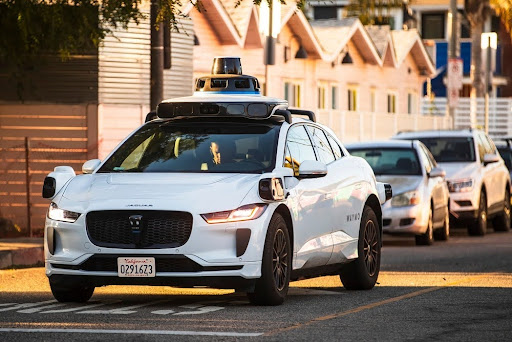



For years, robotaxis felt like something reserved for Silicon Valley and movies about distant, dystopian futures. But now Madrid wants to take a step that, until recently, sounded almost unthinkable in Europe: testing real autonomous taxis driving through the city.
The idea still raises plenty of questions, and understandably so. Will they actually work? Will they be safe? Are we ready to share the road with driverless cars? Even so, the project is already moving forward and could turn the Spanish capital into one of Europe’s first major testing grounds for autonomous mobility.
As futuristic as the term sounds, the idea behind a robotaxi is fairly simple: a car capable of driving itself without a human behind the wheel. Instead of relying on a driver, these vehicles use cameras, radar, LiDAR sensors, and artificial intelligence to detect what is happening around them and make decisions in real time.
LiDAR, for example, creates a kind of 3D map of the environment. Radar helps calculate distance and speed, while cameras recognize traffic lights, lanes, signs, other vehicles, and of course pedestrians crossing nearby. Connectivity also plays an important role by helping keep maps updated, providing real-time traffic information, and allowing communication with certain infrastructure systems. Even so, these vehicles should not depend entirely on internet access for core safety decisions.
The difference compared to a regular car with driver-assistance features is significant. If you have driven a recent model, you have probably noticed that many modern vehicles can already brake automatically, stay in their lane, or park themselves. But they still require someone paying attention. A robotaxi goes a step further: the goal is for the vehicle to complete entire journeys autonomously.
That does not mean they will suddenly appear everywhere overnight. When we talk about driverless taxis in the Spanish capital, it does not mean fully autonomous cars will immediately be driving freely on every street from day one.
The first tests will be tightly controlled, with specific routes, human supervision, and many limitations. At least initially, the pilot would look much more like a large-scale urban experiment.
According to reports from several outlets, testing could begin between late 2026 and 2027, with a limited fleet of autonomous vehicles operating in selected areas of the city. Companies such as Uber, Cabify, and Bolt have reportedly shown interest in participating.
During the first phases, the cars would not be operating completely on their own. Human supervisors would remain inside the vehicle, ready to intervene if anything goes wrong, which is already common practice in many similar trials across the United States and China.
And for now, these would not be complex journeys through every corner of Madrid. Testing would focus on relatively controlled routes and areas where driving conditions are more predictable. In fact, autonomous mobility experiments already exist in places such as Casa de Campo, Cantoblanco, and Mercamadrid.
But the bigger goal is something else entirely: finding out whether this model can actually work in a real European city, with unpredictable traffic, motorcycles, pedestrians crossing on red lights, and Madrid’s famously chaotic roundabouts. Probably one of the toughest environments possible for any AI system.
Technology is advancing quickly, but European regulation is not moving at the same pace. That remains one of the biggest obstacles preventing robotaxis from becoming a normal part of everyday life in cities like Madrid.
Because there is a major difference between testing autonomous cars on controlled routes with supervisors onboard and allowing them to drive freely among pedestrians, motorcycles, bicycles, construction zones, rain, demonstrations, and the chaos that comes with a large European capital.
There is also the issue of responsibility. If a robotaxi causes an accident, who becomes responsible? The company? The manufacturer? The software developer? Europe is still trying to answer questions that companies in the United States and China have effectively been testing in real-world conditions for years.
Then there is the human factor. Even if the technology works perfectly, not everyone feels comfortable stepping into a car with no driver. Part of the challenge will not be technical at all. It will be psychological: convincing people that artificial intelligence can drive better than humans.
Then again, anyone who has seen Madrid’s Gran Vía at five in the afternoon might argue that case is not especially difficult to make.

The best global eSIM provider
From $2.3/week
A reliable eSIM provider for budget travelers
From $2.4/week
The best global eSIM provider
From $2.3/week
A reliable eSIM provider for budget travelers
From $2.4/week
Our mission is simple: to make sure you never have to ask, “What’s the WiFi password?” again. All our tips come straight from personal experience — because we’d never recommend something we haven’t put to the test ourselves.
Reviews