




If you’re planning a trip this summer, you might find that flights are more expensive than expected. It’s not a new tax or a strike. It’s the price of kerosine-type jet fuel, the fuel used by aircraft, which has surged in recent weeks.
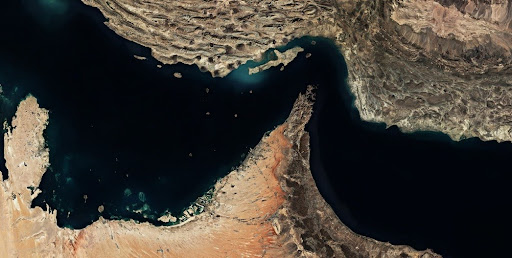
Behind this increase is the conflict between the United States and Iran, active since late February, which has led to the blockage of the Strait of Hormuz, one of the key routes through which a large share of the world’s oil flows. The result is clear. Fuel prices have jumped, and airlines are already starting to adjust their operations.
Fewer flights, higher costs, and one big question: will we end up paying more to fly?
To understand the issue, you need to look at the map. The Strait of Hormuz is one of the most important chokepoints in global oil trade. Before the conflict, around 20 million barrels passed through it every day, close to 20% of global supply. One fifth of the total.
On April 13, the United States began blocking maritime traffic to Iranian ports. Iran responded by restricting passage through the strait, which in practice has reduced the flow of oil in one of the most sensitive regions in the world.
The impact was almost immediate. Brent crude rose above $102 per barrel, while U.S. crude reached $104, levels not seen since the war between Russia and Ukraine.
Although a temporary two-week ceasefire was agreed on April 7, ongoing tensions and uncertainty about how it will be enforced have prevented a full normalization of traffic. In simple terms, oil remains expensive.
If you notice fewer flight options in the coming months or higher prices without a clear reason, this is likely why.
The issue is straightforward. Jet fuel is one of the biggest costs for airlines. When it rises, everything is affected. And that is already happening.
According to data from Cirium Aviation Analytics, 19 of the world’s 20 largest airlines have reduced their capacity for May by 3% compared to last year, measured in available seat kilometers. The only exception has been Turkish Airlines.
There is also another complication. Partial airspace closures in parts of the Middle East are forcing airlines to reroute flights, extend travel times, and burn even more fuel. This inevitably impacts travelers and their wallets.
If there is one business model that struggles most in this kind of situation, it is low-cost airlines.
Last week, the controversial CEO of Ryanair, Michael O’Leary, broke the usual silence around the issue and put it bluntly:
“If fuel stays at $150 per barrel this summer, there will be bankruptcies.”
The first has already happened. Spirit Airlines has filed for bankruptcy after cutting more than 50 percent of its capacity in the face of rising costs.
In Europe, the impact is also becoming visible. Lufthansa has announced a reduction of 20,000 flights through October and the suspension of its low-cost subsidiary CityLine, aiming to save 40,000 tons of fuel.
Other airlines, such as airBaltic, have had to rely on public funding to maintain operations.
Not necessarily. While the situation is tense, some experts are less alarmist.
According to Pol Pérez i Martínez, many major European low-cost airlines have fuel hedging strategies that help soften the short-term impact.
Ryanair, for example, has about 80% of its fuel hedged, while easyJet is closer to 70%. This gives them some breathing room to withstand the shock in the short to medium term.
The biggest risk lies with smaller airlines or those with weaker financial structures. As warned by the International Air Transport Association, carriers with low fuel coverage, high debt, and tight margins could face restructuring if the conflict drags on.
For now, the situation remains relatively stable. Major U.S. airlines such as American Airlines, Delta Air Lines, and United Airlines are maintaining their summer schedules without major disruptions.
That said, U.S. carriers are still highly exposed to global fuel price swings. Unlike some countries, the United States relies heavily on market-driven fuel pricing, meaning airlines feel the impact of rising oil costs quickly.
There is also growing concern about how sustained high fuel prices could affect domestic travel demand. If jet fuel continues to rise, airlines are likely to pass those costs on to passengers through higher ticket prices or reduced capacity on less profitable routes.
For now, travelers may not see drastic changes. But if the situation persists, price increases are likely to follow.
What makes this situation interesting is that it is not an isolated crisis but a clear domino effect that is becoming more common.
A geopolitical conflict leads to an energy disruption. That drives up oil prices, which increases the cost of jet fuel, forcing airlines to adjust their operations.
And that is where the traveler comes in, watching all of this from home, often thousands of kilometers away from the conflict.
Something happening in a strait you may never have heard of can end up directly affecting your next flight to Rome or that holiday you have been planning.
For now, there are no массов cancellations or a collapse of the sector. But there are clear signs of pressure: fewer flights, higher costs, and airlines adjusting their strategies.
If the conflict continues, the impact will most likely reach travelers’ wallets. Because when fuel prices rise, it rarely comes with good news.

The best global eSIM provider
From $2.3/week
A reliable eSIM provider for budget travelers
From $2.4/week
The best global eSIM provider
From $2.3/week
A reliable eSIM provider for budget travelers
From $2.4/week
Our mission is simple: to make sure you never have to ask, “What’s the WiFi password?” again. All our tips come straight from personal experience — because we’d never recommend something we haven’t put to the test ourselves.
Reviews