

News
As manufacturers look for ways to free up space inside devices, even the SIM is being redesigned. The iSIM removes the last dedicated SIM hardware entirely by building it directly into the processor.

The SIM has always been one simple thing: a key that proves to a network you're allowed to connect. That key just keeps getting smaller and harder to lose, and the iSIM is the last stop on the journey.
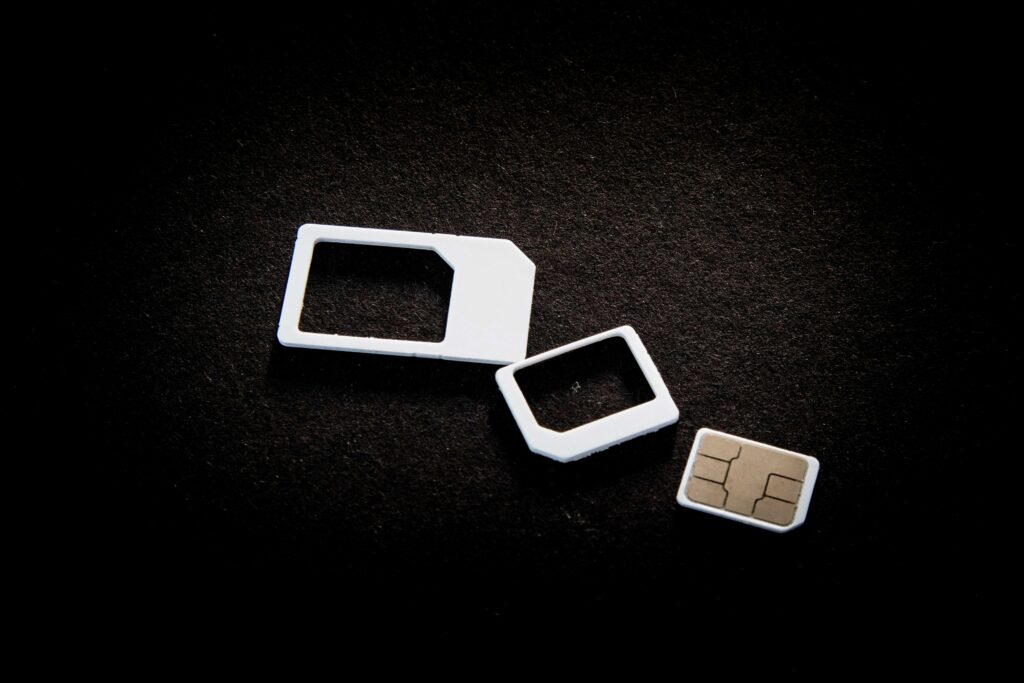
Here’s a breakdown of the evolution of a SIM card:
An iSIM takes the job the SIM has always done and moves it inside the phone's main processor, into a locked, protected area, so there's no separate SIM chip left anywhere in the device. As the security firm Thales explains it, an eSIM still needs its own dedicated chip, whereas an iSIM builds that function into the processor itself and removes the need for any separate SIM space at all.
Crucially, an iSIM follows the same rules as an eSIM. It complies with the same GSMA specifications, which means it's programed remotely the same way. For users, that's the whole point: nothing about buying or installing a data plan changes.
This isn't a concept floating around a lab. Vodafone, Qualcomm and Thales demonstrated the world's first iSIM smartphone back in January 2022, and Qualcomm and Thales unveiled the world's first GSMA-certified iSIM on a Snapdragon mobile platform in early 2023, clearing the way for commercial devices. Specialist firms like Kigen now supply the iSIM software that goes into chipsets and modules, and analysts note that big operators (AT&T, Vodafone and Deutsche Telekom among them) have shown even more enthusiasm for iSIM than they did for eSIM.
The early action is in machines, not phones: the technology shines in tiny devices where every millimetre and every cent counts, which is why the first wave is heavy on IoT - sensors, trackers, connected cars and wearables.
The appeal is simple. Removing a component frees up space and cuts cost. Folding the SIM, processor and radio into one unit significantly reduces the circuit-board footprint, the parts a manufacturer has to buy, and manufacturing cost. That space can go toward a bigger battery or a thinner design, and the savings add up fast when you're shipping millions of devices.
It also unlocks gadgets that were never going to have a SIM tray in the first place, smartwatches, earbuds, cameras, drones, letting far more of your kit carry its own connection.
Very. Counterpoint Research expects more than 9 billion eSIM- and iSIM-capable devices to ship between 2024 and 2030, with iSIM-capable devices growing the fastest of any type, at roughly a 160% compound annual growth rate over that period.
Looking further out, Counterpoint predicts iSIM will become the predominant type of SIM after 2028, with cumulative shipments reaching around 4 billion by 2030. ABI Research forecasts eSIM-enabled device shipments will top 633 million in 2026, driven by Chinese smartphone adoption and the rollout of the new machine-focused eSIM standard. The physical SIM, in other words, is on a clear path to retirement.
This is what matters for anyone who travels, so let's be precise about what changes and what doesn't.
Apple is already racing down this road - the thinnest iPhone yet shaved itself to 5.6 mm by leaving the SIM card behind entirely.
The bottom line: the iSIM is the SIM disappearing into the chip. There's nothing you need to do about it today, and when it arrives you probably won't even notice - except that your phone is a little thinner, the SIM tray is gone, and your travel data still loads with a tap.

The best global eSIM provider
From $2.3/week
A reliable eSIM provider for budget travelers
From $2.4/week
The best global eSIM provider
From $2.3/week
A reliable eSIM provider for budget travelers
From $2.4/week
Our mission is simple: to make sure you never have to ask, “What’s the WiFi password?” again. All our tips come straight from personal experience — because we’d never recommend something we haven’t put to the test ourselves.
Reviews