


Our voice
We have gone from clicking on news websites through Google and social media to simply asking AI what happened. In an ecosystem where bots gather information indiscriminately, hallucinate facts, and social media is flooded with low-quality content, can we still trust what we read?

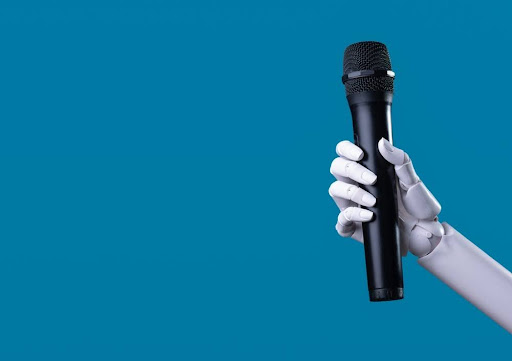
Back in 2022, the click ruled everything.
News organizations, blogs, and content creators had already learned the rules of the game. Traditional media had long moved away from TV and print advertising and become dependent on ever-changing algorithms on Instagram and TikTok.
Google worked in a similar way. You could search for “where can you travel during the pandemic,” and Google would serve ten links of its choosing: a news article about a country lifting restrictions, a travel blog recommending destinations, or available flights you could book. You opened a page, and someone earned a visit.
It was also, and to some extent still is, the era of outrage, or “ragebait.” The content that spread the most was not necessarily the most useful, but the most likely to provoke a reaction.
Then, at the end of that year, OpenAI released ChatGPT to the general public. A Reuters report was already talking about more than 100 million monthly users by early 2023.
The experience proved, and still proves, almost insultingly efficient. There is no longer any need to open ten tabs, compare sources, or watch an entire YouTube video. AI does it for you and delivers a summary in five seconds.
Online media, blogs, and everyone who depended on clicks suddenly found themselves facing a crisis.
In this new environment, where we consume information filtered through AI instead of visiting the original source, a question remains unanswered: can we trust what we read?
According to the Medill School of Journalism at Northwestern University, traffic to the websites of the 100 largest newspapers fell by more than 40% over the last four years. Forecasts from the Reuters Institute are not any more optimistic, predicting another 40% decline in traffic from search engines over the next three years.
So yes, when it comes to how we get information, AI is winning.
We read through ChatGPT, Copilot, and even Google has joined the trend with AI-generated summaries. But how does AI get informed?
It seems that almost anything goes.
AI draws information from every available source, sometimes taking considerable liberties with copyright law. And when it cannot find an answer, it may simply invent one.
In 2024, several authors and journalists took Anthropic to court for using copyrighted works to train its Claude chatbot. The dispute eventually ended with a $1.5 billion settlement.
But that case is far from unique. More than 40 lawsuits currently pit AI companies against copyright holders in the United States.
While those legal battles continue, thousands of websites are fighting against data scraping, the process through which AI systems collect information to train themselves. Yet every time one bot is blocked, another seems to appear.
By the end of 2025, 404 Media reported that many websites were still blocking outdated bots while newer ones continued entering through the back door.
There have been some winners, however. Reddit signed agreements with Google and OpenAI that allow both companies to pay for access to its platform.
Why Reddit?
Because in a sea of endless content, it offers something increasingly rare: real human experiences rather than generic answers.
The second major challenge is information quality.
AI frequently creates facts when it lacks them. In other words, it hallucinates.
A study conducted by the European Broadcasting Union and the BBC found that 45% of responses produced by AI assistants contain at least one significant error.
This has two serious consequences. First, it undermines trust in journalism. Second, it contaminates the information people use to make decisions.
Have you heard the term AI Slop?
It was selected as Merriam-Webster’s Word of the Year in 2025 and refers to AI-generated content created without meaningful oversight, human purpose, or value beyond sheer volume.
In simple terms, it is the flood of low-quality AI content filling social media platforms.
This includes harmless examples such as videos of cats heroically saving their families while emotional music plays in the background or AI-generated clips of Pope Francis dancing hip-hop.
Others are less harmless.
One example was the fake video shared by Donald Trump that appeared to show former President Barack Obama being arrested and imprisoned, generating widespread attention across the United States.
At a larger scale, disinformation has become a political strategy.
In March 2025, researchers uncovered a Russia-linked network that flooded the internet with pro-Kremlin content specifically designed to influence the outputs of chatbots such as ChatGPT, Gemini, and Grok.
The most concerning part is that it appears to be working.
According to NewsGuard, roughly 33% of leading generative AI assistants produced responses favorable to the narratives promoted by that network.
AI has biases of its own, and those of us who consume information through AI systems inevitably absorb some of them.
Governments are beginning to respond.
The European Union’s AI Act is already in force, requiring organizations, advertisers, media companies, and others to clearly disclose when users are interacting with AI-generated content.
Meanwhile, journalism is trying to find its place in a world where it no longer controls the gateway to information.
Some news organizations have responded by creating entirely new roles dedicated to fighting misinformation.
One example is Marianna Spring at the BBC, who works as a disinformation correspondent. A role that would have sounded excessive just a few years ago now feels essential.
Professionals who verify sources, cross-check facts, and review AI-generated content have become central to maintaining public trust.
If media organizations want to remain relevant and credible, they cannot avoid this responsibility.
The paradox is clear.
At a time when we have more information than ever before, value is returning to the basics:
Verify.
Cross-check.
Question.
In other words, practice journalism.
AI has done many things well.
We work faster, filter information more efficiently, and save time. The promise is undeniably attractive.
But what are we giving up in return?
If videos can be fake, if answers can be biased, and if we stop visiting original sources, then the problem is not only the technology itself.
It is how we use it. That is why the responsibility also falls on us. Seek the original source. Compare different perspectives. Do not settle for the first answer.
In this new era, where information can be generated, transformed, and distributed almost frictionlessly, critical thinking may be the only tool capable of protecting us from misinformation. And perhaps, from ourselves.

The best global eSIM provider
From $2.3/week
A reliable eSIM provider for budget travelers
From $2.4/week
The best global eSIM provider
From $2.3/week
A reliable eSIM provider for budget travelers
From $2.4/week
Our mission is simple: to make sure you never have to ask, “What’s the WiFi password?” again. All our tips come straight from personal experience — because we’d never recommend something we haven’t put to the test ourselves.
Reviews