

Our voice
Europe's new Entry/Exit System replaced passport stamps with facial scans and fingerprints for millions of visitors. The EU calls it smarter border control. Critics call it mass biometric collection.

There's a small ceremony most travelers don't realize they'll miss until it's gone. You hand over your passport, a bored officer flips to a blank page, and thunk - an inky stamp, a date, a place, a little proof you were somewhere. You owned that, it lived in your pocket.
Cross into Europe today and that moment is gone. Since April 10, 2026, the EU's Entry/Exit System has been fully operational across 29 countries, and for non-EU travelers it has quietly replaced the stamp with something you don't get to take home.
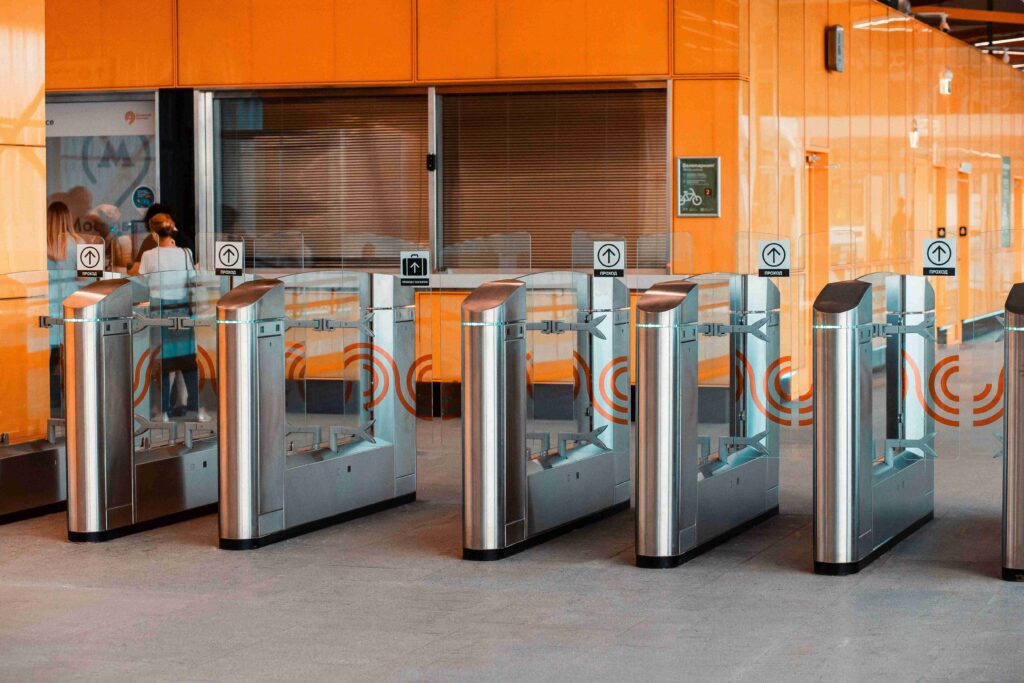
The first time it happened to me, I caught myself waiting for the thunk out of habit. There was no stamp. There was a camera, a fingerprint reader, and a screen that already seemed to know more about my last three years of movement than I could have recited myself.
The EES applies to every non-EU, non-Schengen national arriving for a short stay (up to 90 days in any 180) visa or no visa. On your first entry it records your facial image, four fingerprints, your travel-document details, and the time and place of every entry and exit after that. It's run centrally by the EU's IT agency, eu-LISA, and the data is kept for three years from your last exit, refreshing every time you cross.
Let me give you an example. Driving into Croatia, I had my picture taken at the border on every single trip - photographed again as if the last crossing had never happened. The file doesn't sit quietly for three years and expire. Each time I turn up it takes a fresh image, stamps a fresh time, and restarts the clock. The record doesn't fade, just the opposite, it grows.
And the worst part is that there is no opt-out. The EU's own traveler guidance says it flatly - refuse to give your biometrics and you are simply refused entry. You are not asked to consent. You are told the price, after you've already traveled to the door.
The EES isn't a lone database. It's one of four big EU systems, alongside:
Two more are on the way: ETIAS, and ECRIS-TCN, a criminal-records system for non-EU nationals. And since the EU's 2019 "interoperability" regulations, these are being wired together - one search can now check them all at once.
And I'm in there too. The fingerprints I left in a Vienna arrivals hall were meant to prove one thing: that I am who my passport says, and that I'll leave on time. But once they're in the system they become available (under specified conditions) to national police and Europol, to investigate terrorism and "other serious crimes."
"Other serious crimes" can mean almost anything. Writing for the European Law Blog, legal researcher Samay Jain argues the phrase is broad enough to set no real limit, and calls the biometric architecture beneath it "constitutively disproportionate."
He's describing the exact move I'm objecting to: data taken for one narrow, stated reason becomes permanently searchable for purposes nobody assessed when I pressed my fingers to the glass. The policy literature even has a name for the drift - function creep. A system built to count tourists slowly becomes a system that does other things to the people it counted. But I didn't agree to the second system, nobody even asked.
These databases are built almost entirely around third-country nationals. EU citizens' biometrics are swept in only at the edges. So the people handing over faces and fingerprints (the people whose files sit on the system for years) are overwhelmingly visitors. Tourists. You. Me.
Hold that against how the EU treats its own. For its citizens the bloc spent a decade deleting friction: "Roam Like At Home" killed phone-roaming surcharges, internal borders vanished, the continent became one smooth room to move around in. That same union now meets outsiders with one of the most invasive biometric intakes of any major destination on earth.
The German in the lane beside me at that border waves through. I get the camera. Same road, same afternoon - two completely different Europes, sorted entirely by which passport sits in the glovebox. This is why "borderless Europe" was never a description of the place. It was a description of a club.
And that’s not all. Later in 2026, ETIAS (Europe's answer to the US ESTA) is due to launch: visa-exempt travelers from 59 countries, roughly 1.4 billion people, will pay €20 for a three-year authorization, a fee the Commission raised from a planned €7 in July 2025.
Before you board, your application gets screened against Interpol, Europol and the Schengen Information System. To its credit, ETIAS stores fewer fields, keeps no fingerprints, and bars profiling. But the direction of travel is unmistakable: more pre-screening, more cross-checking, more of you resolved before you've packed a bag.
I want to be fair, because the security argument isn't 100% empty. A manual stamp was easy to forge and useless for tracking overstays; a smudge of ink was never serious border control. In its first six months the EES logged 66 million crossings, pushed daily fingerprint checks from around 17,000 to roughly 87,000, and refused entry to some 32,000 people: nearly 7,000 flagged as overstayers, about 800 as security concerns.
But look at that math again, because it is the case. To catch a few thousand overstayers, the EU collected and stored the biometrics of all 66 million (the overwhelming majority of whom have done nothing wrong) and made every one of those files searchable by police across a continent. That is not a security measure with a privacy cost attached, it's mass biometric collection.
And I'm not the only one doing this arithmetic. In the German Bundestag, lawmaker and former human-rights lawyer Clara Buenger has called the EES outright mass surveillance, warning that the EU is fusing vast databases without proper oversight and blurring the line between immigration and criminal prosecution.
Digital-rights groups including EDRi and Statewatch have argued for years that Europe's "smart borders" never passed the necessity-and-proportionality test the EU's own highest court demands. They're right to push it. Because the real question was never "security or privacy." It's whether this much, on this many innocent people, kept this long, was ever proportionate to the problem. The numbers say no.
If you're going to take something this permanent from people, the least you'd expect is that it runs well. It doesn't.
Lisbon airport suspended its EES kiosks after waits hit seven hours. Processing times jumped as much as 70% at peak times at airports like Málaga and Barcelona. Greece announced it would suspend biometric registration for British passport holders over the summer, and the travel firm Holiday Extras found 35% of British travelers had already changed their plans because of the system.
I can confirm the friction firsthand. My flight from Cairo landed in Vienna and I lost hours in the arrivals hall, inching toward the kiosks while the queue folded back on itself and exhausted travelers tried to work out which machine wanted what. By car into Croatia it was the same story in another key: everyone idling at the barrier, waiting to give the same photograph they'd handed over the trip before.
I'm not telling you to cancel Europe. For most travelers the EES is a slightly slower gate, and ETIAS will be a €20 form you complete once every three years. When ETIAS goes live in late 2026, apply early rather than at the airport; keep your passport valid well ahead; budget extra time at the border through the first chaotic summers.
And if you cross by car at a quieter land border the way I do, don't assume "quieter" means "faster", the same biometric step happens whether there's a jet bridge or just a booth and a barrier.
But understand the bargain you're now inside, because it's part of a bigger shift we've been tracking. Not long ago I wrote about the end of "permanent roaming" - how, for a decade, your phone slipped across borders without registering, and how governments from Turkey to the Gulf are now forcing it to show ID. Biometric borders are the same story, told this time about your body instead of your SIM.
For years, crossing a border left nothing behind but a stamp you owned. Now it leaves a record you'll never see, in a system you can't query, shared in ways you never agreed to, demanded only of the people on the outside. The stamp was a souvenir you took home. The file is its opposite, the border keeping a souvenir of you.
Heading to Europe soon? Our guide on how to avoid roaming charges when you travel covers staying connected the moment you clear that biometric gate.

The best global eSIM provider
From $2.3/week
A reliable eSIM provider for budget travelers
From $2.4/week
The best global eSIM provider
From $2.3/week
A reliable eSIM provider for budget travelers
From $2.4/week
Our mission is simple: to make sure you never have to ask, “What’s the WiFi password?” again. All our tips come straight from personal experience — because we’d never recommend something we haven’t put to the test ourselves.
Reviews