


Our voice
We promised ourselves we’d switch off our phones and reconnect with nature. Maybe even hug a tree. But we ended up asking for the WiFi password before even putting our bags down. Rural getaways are sold as total disconnection, but the data paints a very different picture.

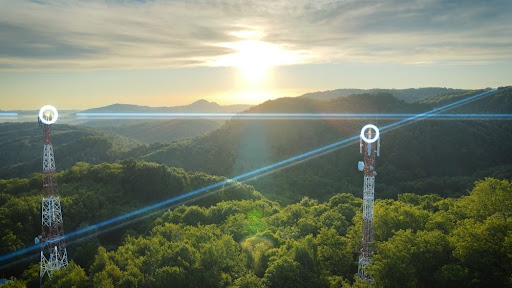
The dream of rural disconnection… how many times have we heard a friend (or, let’s be honest, ourselves) say they needed a few days in the mountains to “disconnect”? It’s hardly surprising, especially nowadays, when city life can feel like a jungle of concrete and endless productivity.
But if we think about it carefully, escaping to the countryside in search of peace is nothing new. Just ask the Romantic poets of the 19th century, who already idealized bucolic life as an antidote to industrial noise. The centuries change, but the fantasy remains timeless. What has changed is the context.
In the first half of 2025, rural tourism in Spain grew by 2.7%. It may seem like a modest figure, but it confirms a stable trend that has been building over recent years. The sector generates around €420 million annually and supports more than 10,000 direct jobs and 32,000 indirect ones, according to figures presented at the IX Rural Tourism Congress.
Airbnb, meanwhile, says that nearly seven out of ten domestic bookings take place outside high-density urban areas. Pretty striking, right? The countryside is no longer reserved for hippies and hardcore hikers. It has become a recurring escape valve.
But the uncomfortable question is another one: are we really “disconnecting” when we choose a rural destination? The answer, if we look at the data, is fairly clear: not really.
Rural disconnection begins, paradoxically, with connection. According to the Smart Rural Trends 2025 report, 78% of travelers plan their trip online. This is not just a side detail. It means digitalization is no longer a superficial layer of rural tourism, but its main gateway.
Picture the scene: you’re having drinks with friends when someone suggests a weekend escape. Everyone agrees immediately. Beers are pushed aside while everyone starts searching for accommodations for the selected dates: photos, reviews, amenities… and click. Done. Your “disconnection” getaway is booked.
And rural accommodations know this very well. Reports like the already mentioned Smart Rural Trends 2025 show that connectivity has become one of the deciding factors when choosing where to stay. WiFi is no longer an added bonus. It’s a basic requirement. Without it, an accommodation loses competitiveness. After all, who wants to spend more than twenty-four hours without internet in 2026?
The irony is subtle but obvious. We want to escape hyperconnectivity, endless emails, and hectic urban routines… as long as there’s good coverage, of course.
We pack our bags for nature. Hiking boots, a good book, a jacket because the evenings get chilly… and of course, the phone. That part is unquestionable. Otherwise, how would we take photos and send them to the family group chat? How would we find the waterfall trail we saw on Instagram? Or the restaurant serving the best local food? Maybe even the laptop comes along too, just in case we feel like watching a movie by the fireplace, or sending one last work email late at night.
But let’s let the numbers speak about internet use during rural tourism stays:
In other words, connectivity is not limited to passive digital entertainment. It has many more layers. It’s functional. It’s logistical. It’s orientation. It’s socialization. As contradictory as it may seem, nature and connection coexist during these trips.
But this is where we need to get serious and stop romanticizing the countryside trend quite so much.
According to Spain’s National Strategy for the Demographic Challenge, 84% of Spanish territory is rural, but only 16% of the population lives there. More than half of municipalities have fewer than 1,000 inhabitants, and many register population densities below 12.5 inhabitants per square kilometer, the threshold the European Union associates with severe depopulation risk.
We are not talking about a picturesque weekend postcard. We are talking about communities facing structural aging and sustained population loss.
The digital divide is inequality in effective access to digital infrastructure. And in the 21st century, that inequality carries economic and social consequences.
For years, poor connectivity severely limited business development in rural areas, as companies chose to establish themselves in cities instead. It also restricted access to online education and remote work opportunities. A weak connection was never just a minor inconvenience. It was a structural disadvantage.
While visitors expect stable coverage even in an isolated cabin for a weekend getaway, many of these territories spent decades fighting for something as basic as enough signal to make a video call. Although broadband expansion has improved thanks to public digitalization programs, the differences compared to urban environments remain significant in terms of real quality, stability, and effective speed.
And we are not talking about technical nuances. This is an issue of territorial equality.
Connectivity is not just about entertainment. It means access to digital public services, telemedicine, online education, remote work, and electronic markets. In many villages, having fiber internet does not mean streaming TV shows in ultra HD. It means:
In fact, the rise of rural tourism itself has been closely linked to digitalization. As initiatives like Acelera Pyme highlight, internet access has allowed small family-run accommodations to position themselves on global platforms, manage real-time bookings, and reach new types of travelers. The internet has allowed rural areas to prosper and connect with broader markets.
Of course it has.
Before, getting lost was part of the thrill. Today, with GPS in our hands 24/7, uncertainty is reduced to almost zero. Before, we took mysterious photos on analog cameras without knowing if they would turn out well. Today, we come back with our camera rolls overflowing.
Before, conversation was the only nighttime company while we stared at the stars and tried to identify constellations. Today, we can watch the latest episode of The Sopranos inside a wooden cabin with a cup of hot tea in our hands.
Escaping urban rhythms and breathing clean air is still a completely legitimate need. But so is our technological dependence, not only because of habit, but because of how society is structured. We live in a digital ecosystem where orienting ourselves, booking, paying, working, or simply communicating depends on an active network.
Demonizing that reality would be simplistic, and that is not the point I want to make. On the contrary, technology can also enrich the experience. It allows us to download hiking routes on Wikiloc, avoid unnecessary detours, locate services in small villages, or preserve memories.
That said, if you truly want a fully immersive experience, some remote accommodations are now offering lockboxes where guests can leave their phones behind and disconnect for real. Unsurprisingly, they are not cheap.
Ultimately, the romanticization of rural escapes responds less to technological reality and more to a symbolic need. We need to believe we can switch off the world, even if only for a weekend. And those of us who live in cities know exactly how necessary that feeling can become.
But the evidence points elsewhere: the internet is now an integral part of the vacation experience, even, and especially, in remote destinations. Not because we are incapable of living without it, but because it has become an essential tool for organizing ourselves, navigating, working, and sharing.
Rural disconnection has not disappeared. It has simply been redefined.
Today, it no longer means turning off your phone entirely. It means using it differently. Answering fewer emails. Choosing when to connect. Replacing your wallpaper with a landscape you actually saw with your own eyes.
And that does not make the experience any less real.

The best global eSIM provider
From $2.3/week
A reliable eSIM provider for budget travelers
From $2.4/week
The best global eSIM provider
From $2.3/week
A reliable eSIM provider for budget travelers
From $2.4/week
Our mission is simple: to make sure you never have to ask, “What’s the WiFi password?” again. All our tips come straight from personal experience — because we’d never recommend something we haven’t put to the test ourselves.
Reviews