

Travel Guides
Cuba uses plug types A, B, C and L, and voltage can vary between 110V and 220V depending on where you stay. If you’re traveling from the U.S., your plugs will usually fit, but you may still need an adapter or voltage awareness depending on the outlet and appliance.

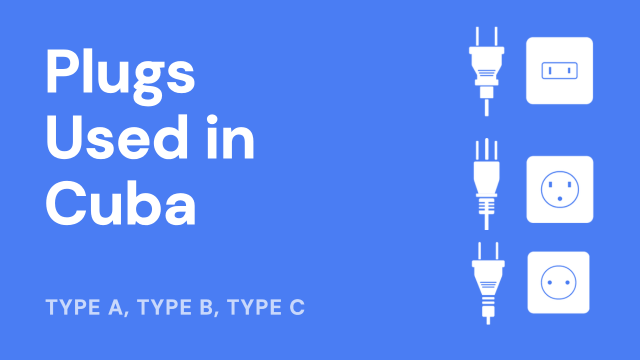
Cuba’s electrical setup can be confusing for travelers because it uses a mix of both American and European plug types. While type A and B outlets (the same as in the U.S.) are common, some hotels and accommodations also use type C or L sockets, especially in newer or renovated buildings.
From experience and traveler reports, many accommodations in Cuba still operate on 110V, but 220V outlets are also present, sometimes within the same room. This means that while most U.S. travelers won’t need a plug adapter for basic use, it’s still important to check voltage compatibility, especially for devices that are not dual voltage.
If you’re coming from the U.S., your plugs will often work without an adapter, but bringing a universal adapter is still recommended for flexibility. Travelers from the UK or Canada will likely need an adapter, and in some cases, a voltage converter depending on their devices.
Cuba uses a mix of plug types A, B, C, and L. Because of this, you may encounter different outlets depending on where you stay, sometimes even within the same room. Below are the main plug types used across the country.
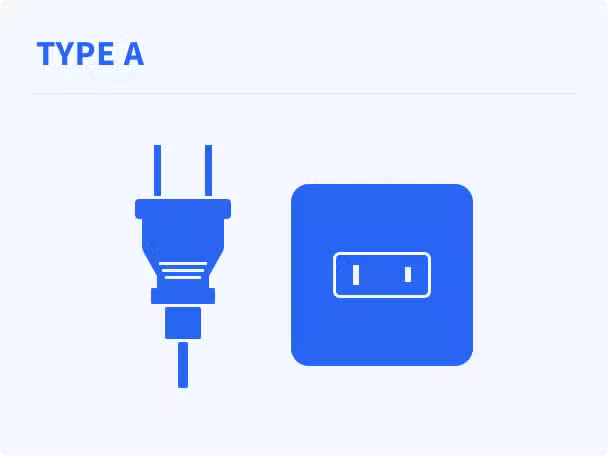
Two flat parallel pins. This is the same plug used in the United States and is common in older buildings and many accommodations in Cuba.
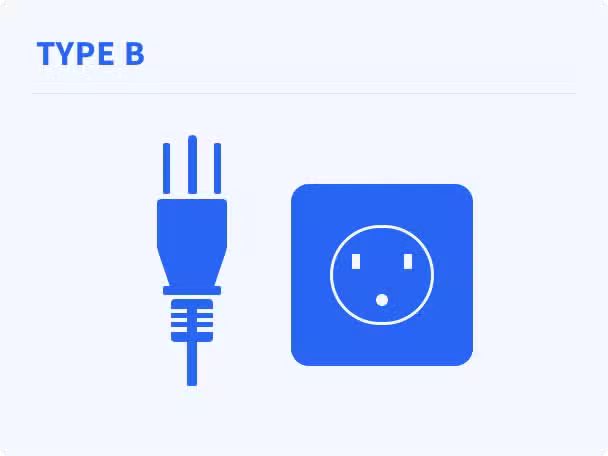
Two flat parallel pins with a round grounding pin below. Also standard in the U.S. and widely used in Cuba.
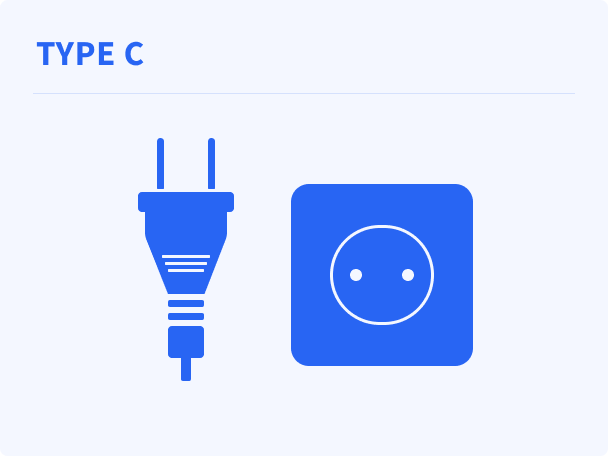
Two round pins. Common in Europe and found in some newer or renovated properties in Cuba.
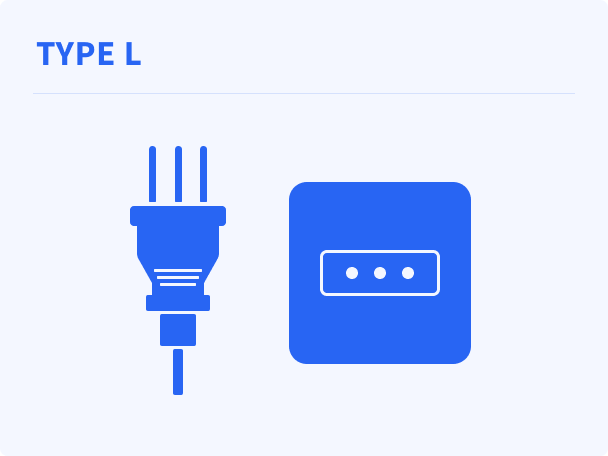
Three round pins arranged in a straight line. Less common but still present in some locations, particularly in certain buildings or imported electrical setups.
Because Cuba uses a mix of plug types A, B, C, and L, a universal travel adapter is the most practical option for most travelers.
Most reliable adapters from brands like EPICKA, Tessan, and Baseus typically range from $23 to $50, depending on features like USB ports and power output.
A well-known all-in-one adapter that supports plugs from the U.S., Europe, the UK, and Australia. It’s widely used by travelers because it works across multiple regions, including Cuba, and includes several USB ports for charging multiple devices at once.
Price: $49.99
A compact adapter with multiple USB and USB-C ports, making it a good option if you’re traveling with several devices. It’s especially useful for shorter trips where you want something lightweight but still versatile.
Price: $22.99
A higher-powered option designed for heavier usage, including laptops and fast charging. If you’re working remotely or carrying power-hungry devices, this offers more output compared to standard adapters.
Price: $39.99
Cuba uses both 110V and 220V, so whether you need a voltage converter depends on your device.
In most cases, a universal adapter is enough, but it’s always best to check your device label for voltage compatibility before traveling.
There are four main ways to get internet in Cuba: roaming, eSIMs, local SIM cards, and pocket WiFi.
Roaming lets you use your home mobile plan abroad by connecting to a local Cuban network, but it’s usually the most expensive option and not something I personally rely on when traveling. U.S. providers like AT&T and Verizon do support Cuba, but plans can cost around $10 to $15 per day or more, which can add up quickly.
eSIMs are digital SIMs you install directly on your phone, and from experience, this is one of the easiest options since you can set it up anytime without needing to visit a store or carry another device. eSIM providers for Cuba like GigSky and Roamless offer the convenience of instant activation makes them a strong option for short trips.
Local SIM cards in Cuba are provided by ETECSA, the country’s state-owned telecom provider, but I haven’t personally used this option because it usually involves going to a physical store, showing your passport, and asking for activation. It can be one of the cheaper options, but the setup process can be inconvenient, so it’s generally more suitable if you’re staying for a longer period, like a month or more.
Pocket WiFi devices create a portable hotspot that multiple devices can connect to, and I’ve used them several times, especially in places like Japan and Sydney where you can pick them up at airport counters. They’re great for group travel, but you do need to carry an extra device and make sure it’s fully charged before heading out, and in Cuba, these typically need to be arranged in advance rather than rented on arrival.
Plug types vary across countries, which is why you’ll often need a travel adapter when going abroad.
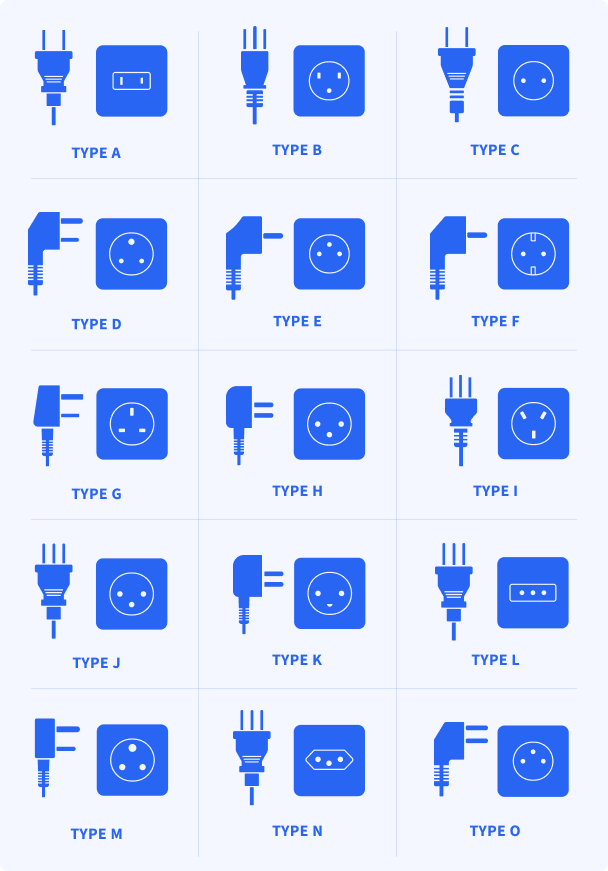
While Cuba uses types A, B, C, and L, nearby destinations in the Americas often use different combinations of plug types and voltages.
| Destination | Plug Type | Voltage |
| United States | Type A, B | 120V |
| Mexico | Type A, B | 127V |
| Costa Rica | Type A, B | 120V |
| Panama | Type A, B | 120V |
| Colombia | Type A, B | 110V |
| Brazil | Type C, N | 127V / 220V |
| Argentina | Type C, I | 220V |
| Chile | Type C, L | 220V |
| Peru | Type A, B, C | 220V |
| Puerto Rico | Type A, B | 120V |
If you’re traveling around the region, it helps to check each country in advance:
Cuba partially uses the same plugs as the U.S., specifically types A and B. However, some places also use types C and L, so bringing a universal adapter is still recommended.
No, Cuba does not use the same plugs as the UK, which uses type G outlets. You will need a plug adapter to use UK devices in Cuba.
Cuba shares plug types A and B with Canada, so many Canadian devices will fit. That said, an adapter is still useful since other plug types may be present.
A universal travel adapter that supports types A, B, C, and L is the safest choice for Cuba. This ensures compatibility across different outlets you may encounter.
Yes, you can plug in your iPhone in Cuba as long as you have the correct adapter for the outlet. Most iPhones are dual voltage, so you won’t need a voltage converter.

The best global eSIM provider
From $2.3/week
A reliable eSIM provider for budget travelers
From $2.4/week
The best global eSIM provider
From $2.3/week
A reliable eSIM provider for budget travelers
From $2.4/week
Our mission is simple: to make sure you never have to ask, “What’s the WiFi password?” again. All our tips come straight from personal experience — because we’d never recommend something we haven’t put to the test ourselves.
Reviews