
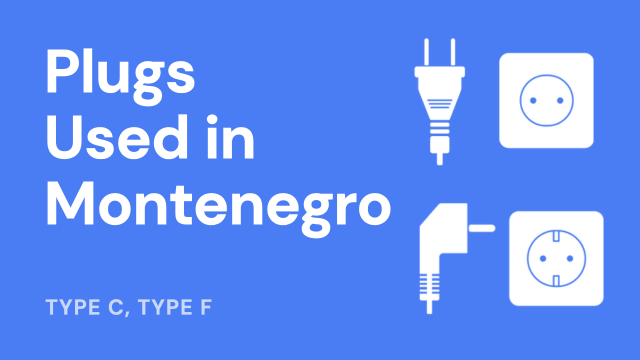


Montenegro uses type C and type F plugs with a standard voltage of 230V and a frequency of 50Hz. If you’re traveling from the US (like me), the UK, or Canada, you’ll likely need a plug adapter. Travelers coming from most European countries usually won’t need one.
In this guide, I talk about my experience with plug types in Montenegro, where to buy adapters, when you need a voltage converter, and some tips to stay connected in the country.
Montenegro uses type C and type F plugs with a standard voltage of 230V and a frequency of 50Hz. These are common across many European countries, so travelers from most of Europe can usually use their devices without an adapter.
During my trip, I brought an adapter since I was traveling from the US, and I mainly used it for charging my everyday devices.
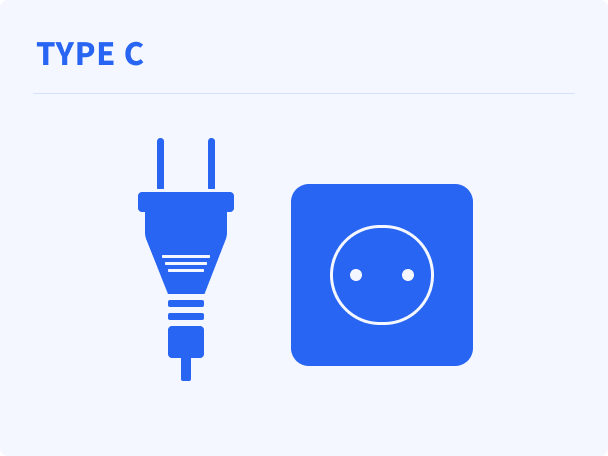
Type C, often called the Europlug, has two round pins and no grounding clips. I mostly used this plug type for smaller electronics like my phone charger and laptop adapter.
Because of its simple design, type C plugs fit into both type C and type F outlets. In Montenegro, I found this convenient since many hotel rooms and apartments had outlets that accepted my chargers without any issues.
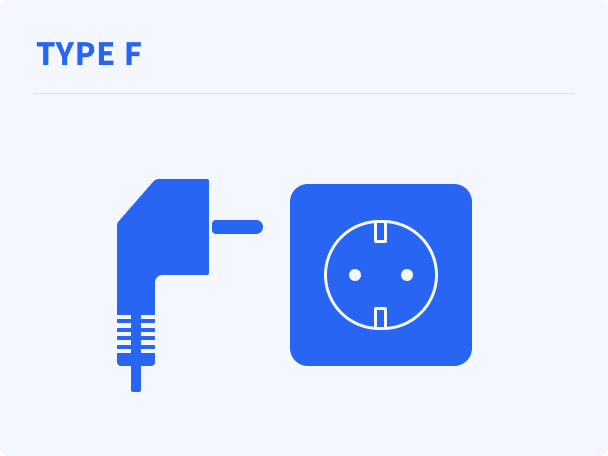
Type F, commonly known as the Schuko plug, also has two round pins but includes metal grounding clips on the sides. These clips provide grounding, which makes the plug suitable for higher-power appliances.
I usually saw this plug type used for larger devices such as hair dryers, kettles, and other household appliances. Many outlets in Montenegro support type F, and these outlets also accept type C plugs, which made it easy for me to charge my smaller electronics.
You can buy an adapter for Montenegro online before your trip because you might need it as soon as you land. Here are some brands you can rely on that I’ve tested myself.
This Type C adapter with two round pins is designed for travelers from the US going to Montenegro and other European countries. It comes in two- or six-pack options, is available in several colors (black, blue, orange, white, and yellow), and includes a lifetime warranty. The adapter is rated at 6 amps and 250 volts.
This UK-to-EU plug adapter converts the three-pin UK plug (Type G) to the two-pin Type C outlets used in Montenegro and much of Europe. It includes two USB-C ports, two USB ports, and one UK socket. Built-in safety features protect against overvoltage, overcurrent, overheating, and short circuits.
This Type C adapter lets travelers from the US plug into outlets in Montenegro and other Type C countries. It features a two-in-one input that accepts both two-prong and three-prong North American plugs. The adapter is ultra-compact, comes in a three-pack, and includes a lifetime warranty.
Montenegro runs on 230V and 50Hz, the same as most of Europe. Whether you need a voltage converter depends on where you’re traveling from and what devices you’re bringing.
A quick tip: Check your charger. If it says “100–240V,” you won’t need a voltage converter.
There are several ways to stay connected in Montenegro, including roaming, eSIMs, local SIM cards and pocket WiFi.
Roaming lets you use your existing phone number and mobile plan while traveling. Major providers like Verizon and AT&T roaming offer international travel passes that work in Montenegro.
For example, their plans typically cost around $12 per day and include unlimited data, calls, and texts. While convenient, roaming can become expensive if you stay for several days.
An eSIM is a digital SIM that you install on your phone before your trip. Once you arrive in Montenegro, it activates automatically and connects you to a local network. This means you don’t need to swap physical SIM cards or visit a store.
In my experience, Holafly is one of the best options for unlimited data plans in Montenegro, while Orange Travel offers plans that include data, calls and texts.
You can buy a local SIM card after arriving in Montenegro. These are available at airport kiosks, convenience stores, and official telecom shops. To purchase one, you’ll usually need to show identification, typically your passport.
Major providers such as Crnogorski Telekom and One Montenegro offer tourist SIM plans starting at around €15.
Pocket WiFi is a portable router that lets you connect multiple devices to the internet through a private hotspot. You carry the device with you and connect your phone, tablet, or laptop like regular WiFi.
But this also means bringing an extra device and keeping it charged. Companies like Wifio and My Webspot offer pocket WiFi rentals in Montenegro, usually with a minimum rental period of three days.
Explore the plug types used in other top travel destinations to see if you need a plug adapter.
| Plug Type | Destinations |
| Type A | US, Canada, Mexico, Japan |
| Type B | US, Canada, Honduras |
| Type C | South Korea, Germany, Italy, Spain, Thailand, Iceland |
| Type D | India, Nepal |
| Type E | France, Belgium, Poland |
| Type F | Georgia, Germany, Netherlands, Spain, Indonesia |
| Type G | UK, Cyprus, Singapore, Hong Kong, Ireland |
| Type H | Israel |
| Type I | Australia, New Zealand, China |
| Type J | Switzerland |
| Type K | Denmark |
| Type L | Italy |
| Type M | South Africa |
| Type N | Brazil |
| Type O | Thailand |
Montenegro uses plug types C and F with a standard voltage of 230V and a frequency of 50Hz. Travelers from countries that use different plug types, such as the US, UK, or Canada, need a type C or type F plug adapter to connect their devices.
In many cases, yes. Type C plugs with two round pins usually fit into type F sockets. Type F plugs include grounding clips on the sides and may not fit into every type C outlet.
No. Type C plugs have two round pins, while type D sockets have three round holes arranged in a triangular pattern. A type C plug does not fit properly into a type D outlet.
Montenegro uses type C and type F electrical outlets. Devices that use these plug types connect directly, while other plug types require an adapter.
No. The US uses type A and type B plugs with 120V, while Montenegro uses type C and type F with 230V. Travelers from the US need a plug adapter, and some devices may also require a voltage converter if they do not support 230V.
No. The UK uses type G plugs, while Montenegro uses type C and type F outlets. Travelers from the UK need a plug adapter. Most UK devices support 230V, so a converter is usually not necessary.
No. Canada uses type A and type B plugs with 120V, while Montenegro uses type C and type F with 230V. Travelers from Canada need a plug adapter, and some devices may also require a voltage converter if they do not support 230V.
Yes. Many European countries use type C or type F plugs, which work in Montenegro without an adapter.
A type C plug has two round pins and no grounding clips. People often call it the Europlug, and it appears on many small electronic devices.
A type F plug has two round pins like type C, but includes two metal grounding clips on the sides. People often refer to it as the Schuko plug.

The best global eSIM provider
From $2.3/week
A reliable eSIM provider for budget travelers
From $2.4/week
The best global eSIM provider
From $2.3/week
A reliable eSIM provider for budget travelers
From $2.4/week
Our mission is simple: to make sure you never have to ask, “What’s the WiFi password?” again. All our tips come straight from personal experience — because we’d never recommend something we haven’t put to the test ourselves.
Reviews