

Mobile Internet
I have nothing against pocket WiFi. It got my family online on a chaotic trip through France when none of us wanted to think. But "it worked" and "it was the best option" turned out to be two very different things. After a few more trips, I stopped renting boxes and never looked back. Here is exactly why.

I have rented pocket WiFi on a few trips, and honestly, I get the appeal. The first time, I was landing somewhere new with my family, and the idea of one little box that kept all of us online felt safer than asking everyone to fiddle with their own settings.
But pocket WiFi means you are still managing a thing: waiting for a delivery, watching a battery icon, and remembering to post it back when you would much rather be eating pastries. It is not a dealbreaker - it is just friction. And after testing the modern alternatives properly, I found that friction adds up fast.
Verdict: If you are traveling France as a group and want one device for everyone, Hippocket WiFi is the strongest pocket WiFi pick - it is run out of Lyon, so delivery and returns inside France are smooth, it connects up to 10 devices, and its 4G/5G coverage held up well in our experience.
But for most travelers, an eSIM like Holafly is the better choice. There is no extra device, no battery anxiety, and you are online the second your plane touches down. The rest of this guide walks through both, so you can decide what fits your trip.
If you have decided pocket WiFi is right for you, a few providers come up again and again for France. They each handle pricing, data policy, and logistics a little differently, so it is worth comparing them side by side rather than grabbing the first result.
If you are still deciding whether a portable router even suits your trip, our explainer on what pocket WiFi is is a quick read first.
Below are three of the most commonly available pocket WiFi options for France, with what to expect on cost, delivery, and day-to-day use. One quick note before you book: most "unlimited" pocket WiFi plans are not truly unlimited, so check the fair-usage line carefully.
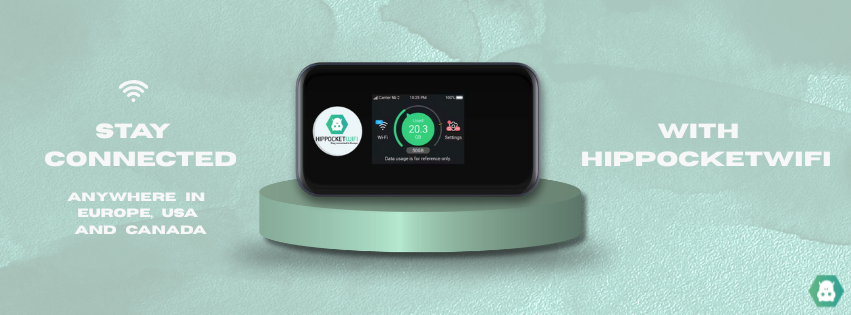
Hippocket WiFi is a France-based rental service (its team operates out of Lyon) that has been renting portable routers for over a decade. It is built squarely for travelers in Europe, the USA, and Canada, and because the company is local, the delivery and return loop inside France tends to be the most painless of the bunch.
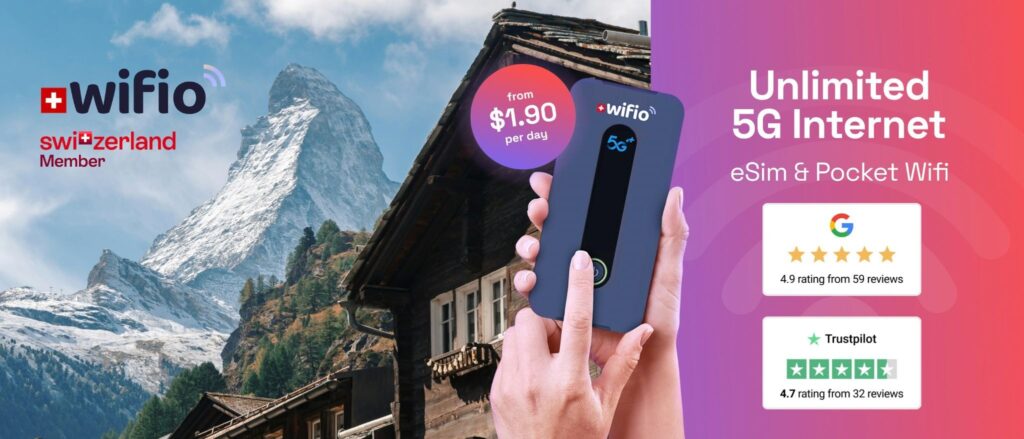
wifio is a Swiss company (Fresh Internet GmbH, based in Aarau) best known for Switzerland coverage, but its Global Pocket WiFi product works in France too. It runs on local mobile networks and is pitched as a travel-friendly router you can carry across multiple countries on one trip.
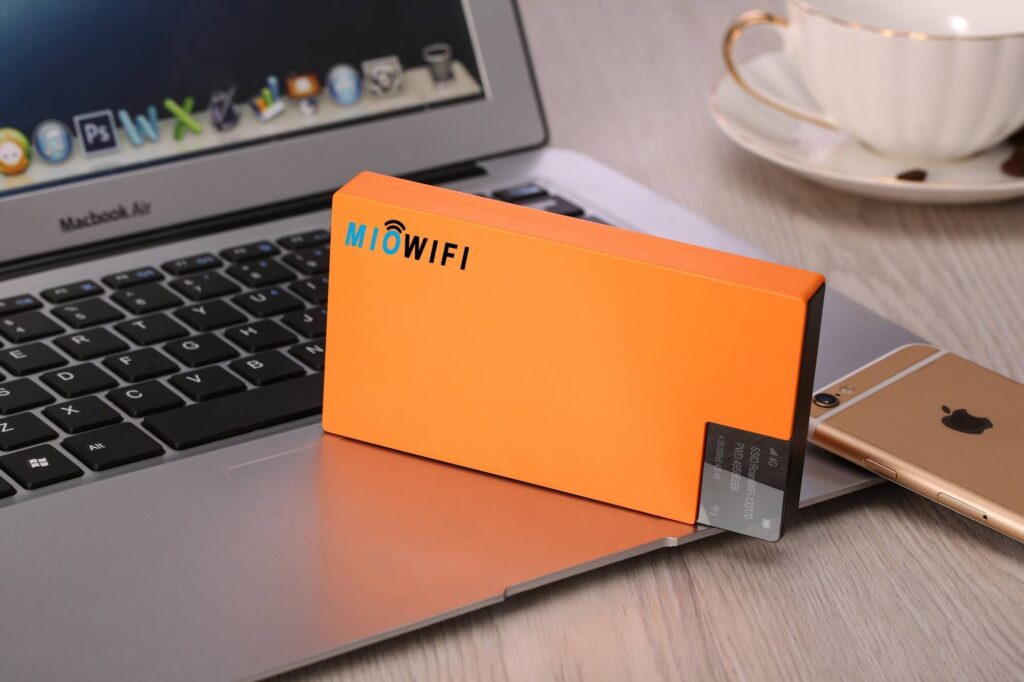
MIOWIFI, part of the MIO Experience Group, offers a portable WiFi device for travelers in France that taps into local mobile networks across major tourist areas. Setup is the usual plug-and-play, and you keep your own number on your phone, since the device handles data separately.

Here is where I will be honest with you: most of the friction above just disappears with an eSIM. There is no battery to babysit and nothing to mail back at the end of the trip. You install it on your phone before you fly, and the moment you land in Paris, Nice, or a tiny village in Provence, you are connected.
The three options below are the ones I keep coming back to after real-world testing across different trips - chosen for reliability, not just price.
If you want the bigger picture of how eSIMs stack up against SIM cards and roaming for this destination, our research piece on internet options in France compares all three head to head. And if you are new to the tech, here is a plain-English guide to what an eSIM is.

Holafly is the one I personally reach for, and it is built for travelers who simply do not want to think about data. Its France plans are unlimited, so there is no usage counter ticking in the back of your mind while you are out exploring.
You can see the full breakdown in our Holafly eSIM review.

Airalo is the big, dependable name in travel eSIMs, and a great fit if you have a rough idea of how much data you will actually use. In France it runs on the Orange network, which is solid coverage to be on.
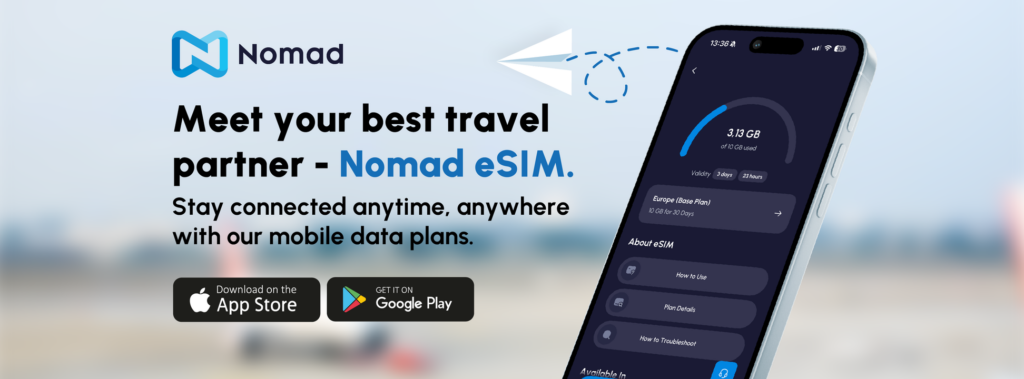
Nomad is a clean, easy-to-use option that gives you a nice middle ground: fixed data plans if you want to keep costs tight, or unlimited plans if you would rather not count. It is also the easiest one to try risk-free.
If you are not sure how much data you actually need before picking a plan, run your trip through our data calculator.
You rent it online before you travel. Providers like Hippocket WiFi, wifio, and MIOWIFI ship a portable router to your home or hotel, usually a few days before your trip, and you post it back afterward in a prepaid envelope.
Yes, pocket WiFi is widely available across Europe, and most rental services that cover France also cover neighbouring countries. Hippocket WiFi, for example, works in France plus 40 other European countries, so a single device can keep you online on a multi-country trip.
Yes. Every major France pocket WiFi provider covers Paris, and most can deliver the device straight to a Paris hotel or address, some also offer pickup near Charles de Gaulle and Orly airports. For a full rundown of airport collection options and prices, see our guide to pocket WiFi at Paris Airport.
Pocket WiFi in France generally costs from roughly €4 to €12 per day, depending on the provider, your trip length, and your data plan. However, eSIMs are usually cheaper, with France plans starting at around $3.50.
Several options advertise "unlimited" data in France. Pocket WiFi rentals like Hippocket WiFi and MIOWIFI offer unlimited plans, though most apply a daily full-speed cap before throttling. For genuinely unlimited data, Holafly's eSIM has unlimited France plans starting at around $3.90 per day.
Free WiFi in France is easy to find in cafés, restaurants, hotels, shopping centres, public libraries, and most airports and train stations. Many French cities also run free public hotspots in tourist areas.
For a local SIM, French carriers like Orange, SFR, Bouygues, and Free all sell prepaid options with strong coverage, and the best one depends on your trip length and how much data you need. Check out the current prices and where to buy in our guide to the best SIM card for France.

Our mission is simple: to make sure you never have to ask, “What’s the WiFi password?” again. All our tips come straight from personal experience — because we’d never recommend something we haven’t put to the test ourselves.
Reviews