


Mobile Internet
When I traveled to Cyprus, having mobile internet ready before I landed made everything easier. After comparing all the available options, I found that eSIMs offered the best mix of convenience, price, and instant connectivity for most travelers.

Traveling to Cyprus felt much easier when I had mobile internet sorted before arrival. I relied on it constantly for maps, bookings, and day-to-day plans while moving around the island. That’s why an eSIM ended up being the most convenient option for me, especially since I could get online instantly without dealing with extra setup after landing.
For most travelers, an eSIM usually makes the most sense because everything can be handled digitally before the trip even starts. I didn’t need to visit a mobile store, swap physical SIM cards, or deal with activation after landing. Setup only took a few minutes, and having internet ready immediately made the whole travel experience feel much simpler.
After comparing all the main options, some clearly work better for travelers than others. During my trip to Cyprus, I realized how much convenience matters when using mobile internet abroad. To sum it up:
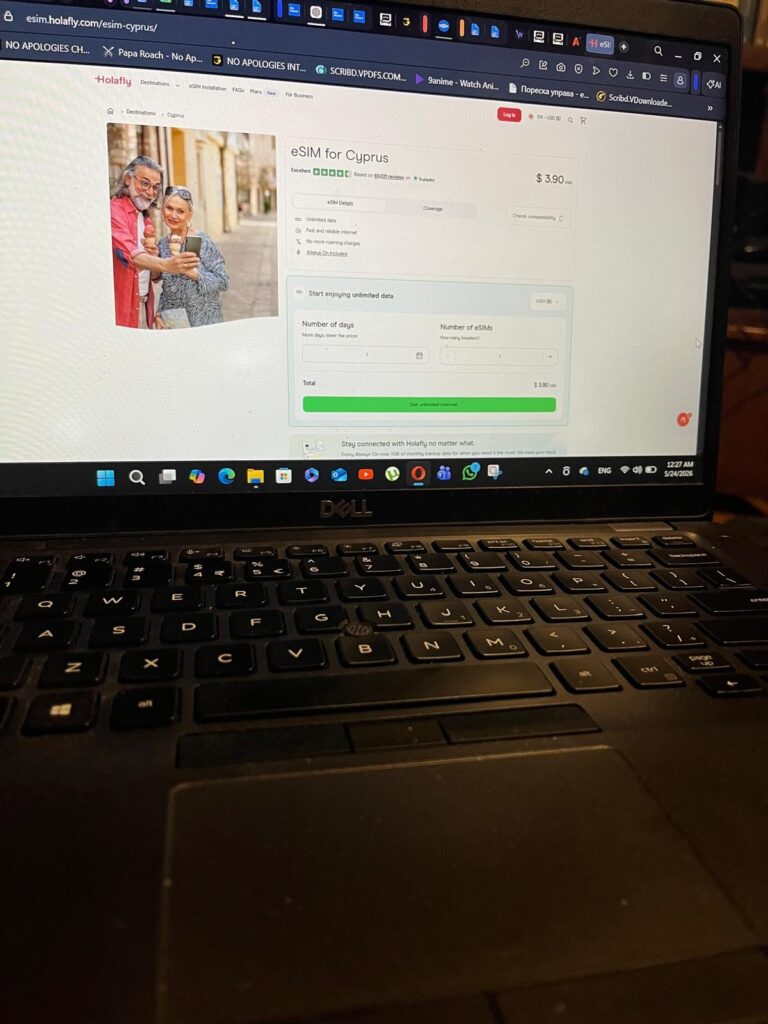
Before going to Cyprus, I researched which options were available for getting internet. Each option came with different levels of convenience, cost, and setup time. Some work instantly on arrival, while others require more preparation or extra steps.
Here are the options:
I’ll go through each option now and explain how it works based on my experience.
An eSIM is a digital SIM that can be activated directly on a phone without needing a physical card. I usually just scan a QR code and the plan installs in a few minutes. After that, it connects to local networks automatically once I arrive in Cyprus.
Mobile coverage in Cyprus is generally strong in most places I travel through, including cities, coastal areas, and tourist spots. I get stable speeds for maps, browsing, and video calls, so it easily covers everyday travel needs without interruptions.
Setup requirements:
Also keep in mind this: Before choosing an eSIM, make sure you’re using eSIM compatible phones and that your device isn’t locked to a carrier.
Limitations:
Verdict: Best for short trips, first-time visitors, and anyone who wants instant internet in Cyprus, especially with an eSIM Cyprus option that works right after landing without any setup hassle.
Local prepaid SIM cards are a solid alternative if you prefer buying internet after arrival instead of setting everything up in advance. They can offer good value for data and sometimes include a local Cypriot phone number, which can be useful for calls, bookings, or local services.
With this option, you usually get more flexibility with data packages. However, it comes with more effort compared to an eSIM.
What you gain:
What you lose:
In Cyprus, the main mobile networks are Cyta, Epic, and PrimeTel, all offering prepaid tourist SIM packages.
Verdict: Best for long stays, residents, or travelers who need a local phone number and don’t mind extra setup time after arrival.
International roaming is often used because it feels like the easiest option. There is nothing to set up, and my phone connects automatically as soon as I land in Cyprus. That convenience is why many people choose it for short trips.
However, since I’m coming from Serbia, roaming can get expensive very quickly because Serbia is outside the EU roaming zone, and Cyprus is not included in EU domestic roaming benefits for non-EU users.
Roaming is usually billed in simple ways. Some operators offer daily passes with a fixed fee, while others charge per MB or per minute, which makes costs harder to control.
To avoid bill shock, it helps to:
Verdict: Roaming is best only for very short trips or emergencies, especially outside the EU, where costs can add up quickly. EU travelers usually have more flexibility under roaming agreements.
Pocket WiFi is a small portable device that creates a personal WiFi hotspot. You can connect to it with your phone, laptop, or tablet. It works using a local SIM card inside the device to provide internet access wherever you go.
Groups often like Pocket WiFi because it allows multiple devices to stay connected at the same time. It is convenient for families or friends traveling together. They don’t need to rely on separate SIM cards or mobile plans.
Downsides:
In many cases, hotspotting from your own phone using an eSIM or SIM card is simpler and replaces the need for a Pocket WiFi device altogether.
Verdict: Best for families or groups with multiple devices who want shared internet access while traveling. For most travelers, it is not ideal since it requires carrying an extra device, keeping it charged, and returning it after the trip.
Public WiFi is widely available in Cyprus. You can find it in hotels, cafes, restaurants, shopping centers, and some tourist areas. Most accommodations also offer free WiFi for guests.
However, it is not always reliable. Speeds change depending on the location and number of users. In busy places, connections often slow down or drop. This makes it unsuitable for steady use while traveling.
Public WiFi also comes with security risks. These networks are shared, so personal data can be exposed more easily. It is not safe to use them for banking or other sensitive tasks.
To stay safer, use a VPN when possible. Avoid logging into important accounts. Turn off auto-join for unknown networks.
Verdict: Best for occasional, non-sensitive use only.
Mobile internet prices in Cyprus can vary depending on the option you choose and the provider. For most travelers, eSIMs usually offer the best balance of cost, convenience, and flexibility, especially for shorter trips.
| Option | Typical Cost Per Week |
| eSIM | $4-$30 |
| Local SIM | $10-$30 |
| Pocket WiFi | $40-$90 |
| Roaming | $12-$100+ |
The amount of data you need in Cyprus mostly depends on how you use your phone while traveling. Some travelers only need maps and messaging, while others use hotspotting, video calls, or remote work every day.
To save mobile data while traveling, it helps to download offline maps before the trip, use hotel or cafe WiFi when possible, and turn off automatic app updates in the background.
Cyta is usually considered the strongest overall network in Cyprus, especially for coverage and reliability. Epic and PrimeTel are also popular and work well in most tourist areas across the island.
The best eSIM for Cyprus depends on how much data you need and how long you stay. For most travelers, the best option is usually an eSIM Cyprus plan that offers quick activation, reliable coverage, and enough data for everyday travel use.
The main mobile providers in Cyprus are Cyta, Epic, and PrimeTel. All three offer prepaid SIM cards, tourist packages, and mobile data plans.
Monthly mobile internet prices in Cyprus depend on the provider and data package. Basic plans can start around $10–$20 per month, while larger data plans usually cost more.
A prepaid SIM card in Cyprus usually costs between $10 and $30 depending on the provider, included data, and validity period.
Cyta is often the best choice for overall coverage, while Epic is popular for competitive prepaid pricing. The best SIM card ultimately depends on your budget, data usage, and where you plan to travel in Cyprus.

Our mission is simple: to make sure you never have to ask, “What’s the WiFi password?” again. All our tips come straight from personal experience — because we’d never recommend something we haven’t put to the test ourselves.
Reviews