

News
For decades, every phone needed a SIM card slot. Now it's disappearing. Apple's latest iPhone and the US version of the Pixel 9 are eSIM-only, while carriers worldwide are adapting. Here's where eSIM-only stands in 2026 and what it means for travelers.

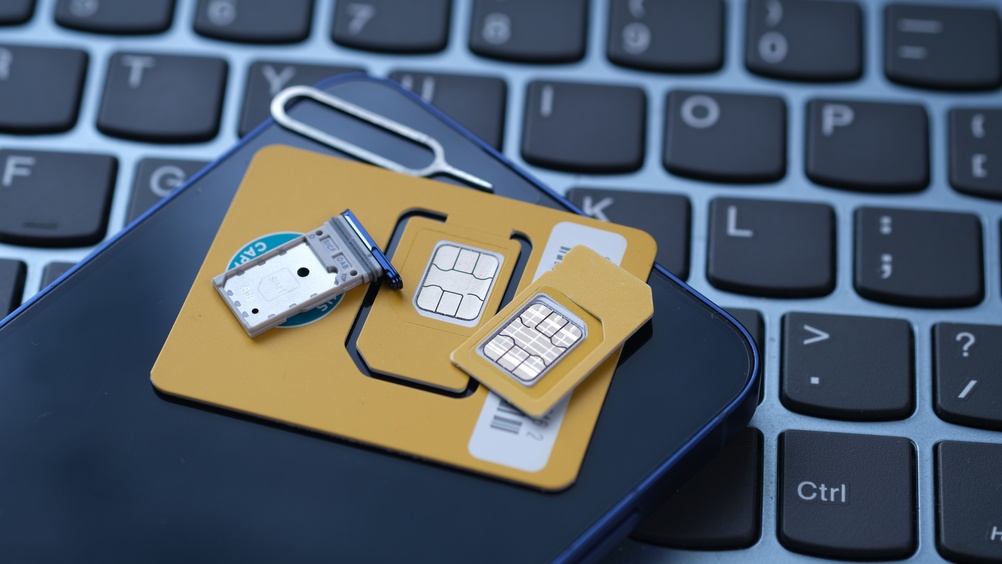
If you buy a new phone this year, there's a growing chance it won't have a slot for a physical SIM card at all. What started as a quiet US-only experiment has become the clear direction of the whole industry, and 2026 is the year it went properly global. For most people the change is invisible until the moment it isn't: the first time you land abroad, reach for a local SIM out of habit, and realize there's nowhere to put it.
An eSIM is a SIM card built into your phone as software rather than a removable chip. Instead of slotting in a piece of plastic, you download a carrier's profile (usually by scanning a QR code) and you're connected. Most phones from the last few years run an eSIM alongside a physical SIM card, giving you two lines at once.
"eSIM-only" is the next step: the physical tray is gone entirely. Everything has to be done digitally. There's no card to insert, and crucially, no card to fall back on.
Apple is leading the charge. It first sold tray-less iPhones in the US back in 2022 with the iPhone 14. With the current iPhone 17 line, that approach has spread: the iPhone 17, 17 Pro and 17 Pro Max are now eSIM-only in 12 countries (including the US, Canada, Mexico, Japan, Saudi Arabia, the UAE, Qatar, Kuwait, Oman and Bahrain) according to MacRumors. Everywhere else, those models still include a tray.
But the real milestone is the ultra-thin iPhone Air, which is eSIM-only worldwide, the first iPhone ever sold without a SIM tray in virtually every market, not just the US. Apple says ditching the tray frees up internal space for a bigger battery (it claims up to 30 hours of video on the iPhone 17 Pro) and improves security, since an eSIM can't be physically pulled out of a lost or stolen phone.
Android is moving the same way, just more cautiously. eSIM is now standard support across Google's Pixel line (since the Pixel 3) and Samsung's Galaxy range (since the Galaxy S20). The difference is that most still keep the tray, with one notable exception: the US version of the Pixel 9 is eSIM-only, mirroring Apple. For now, tray-less Android is mostly a US phenomenon, but the hardware groundwork is laid across the board.
This isn't only about phone design, the carriers are pushing too. Travel-eSIM revenue reached an estimated $1.8 billion in 2025, an 85% jump in a single year, according to research firm Juniper cited by TechRadar.
Smaller, app-first providers have been eating into the roaming business that networks once had to themselves, and the big operators are now scrambling to launch their own travel-eSIM plans to claw that revenue back.
The major holdout is China, where regulations long blocked eSIM entirely and physical SIMs still rule (the same applies to many phones sold in Hong Kong). If you carry an eSIM-only phone into mainland China, getting online can be tricky.
Two other catches matter. First, a carrier-locked phone won't accept a third-party or travel eSIM until it's unlocked, so check that before you rely on one. Second, no tray means no fallback. With an old phone you could always borrow or buy a local SIM in an emergency. On an eSIM-only device, if a profile won't activate, or your provider isn't supported where you are, you have no physical Plan B.
For people who travel, this is genuinely good news most of the time. You can store eight or more eSIM profiles on a modern iPhone, keep your favorite destinations saved, and switch between them in seconds.
The flip side is that the safety net is gone, which makes one habit non-negotiable: sort your data out before you fly. The era when you could wing it on arrival is ending along with the tray.
A few simple steps cover almost every situation:
The SIM tray had a good run, but the direction is now unmistakable. For travelers willing to spend five minutes setting things up before takeoff, a tray-less phone is lighter, simpler and harder to lose track of. The only real rule is the one the missing tray enforces: do your prep on the ground, before you're in the air.

The best global eSIM provider
From $2.3/week
A reliable eSIM provider for budget travelers
From $2.4/week
The best global eSIM provider
From $2.3/week
A reliable eSIM provider for budget travelers
From $2.4/week
Our mission is simple: to make sure you never have to ask, “What’s the WiFi password?” again. All our tips come straight from personal experience — because we’d never recommend something we haven’t put to the test ourselves.
Reviews