

Travel Guides
Peru uses Type A, B, and C plugs with a standard voltage of 220V at 60Hz. Travelers from the US and Canada often won’t need an adapter, while those from the UK usually will. Visitors from Europe may need one depending on the outlet type.

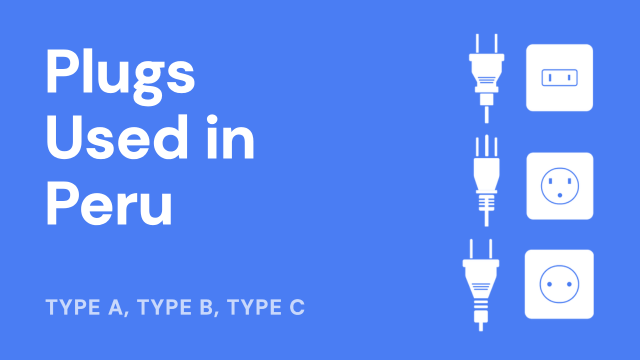
Peru uses Type A, B, and C plugs, with a standard voltage of 220V and a frequency of 60Hz. If you’re coming from the US or Canada, many of your devices may fit directly into Type A or B outlets, so you may not need an adapter in some places.
Travelers from the UK will usually need a plug adapter, while those from Europe may need one depending on whether the outlet accepts Type C plugs.
In this guide, I share what I learned about using plugs in Peru during my trip, where to buy an adapter, whether you need a voltage converter, and tips for staying connected while traveling.
Peru uses Type A, B, and C plugs, so travelers may encounter more than one socket type during their trip. The type you find often depends on the building, hotel, or region.
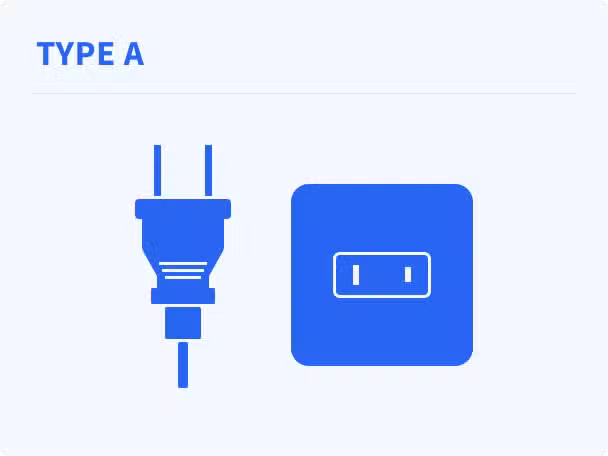
Type A has two flat parallel pins. It is the same plug commonly used in the US and Canada. In Peru, it is often found in hotels, homes, and older buildings, and is usually used for everyday electronics such as phone chargers, laptops, and small appliances.
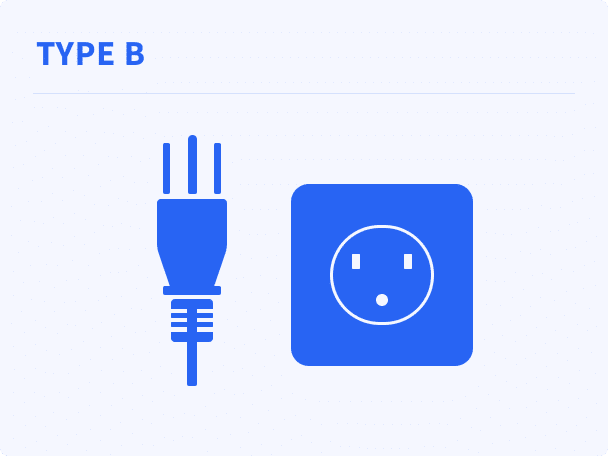
Type B has two flat parallel pins with one round grounding pin below them. It is also common in North America. In Peru, it is typically used for devices that need grounding, such as larger electronics, computer equipment, and appliances with three-prong plugs.
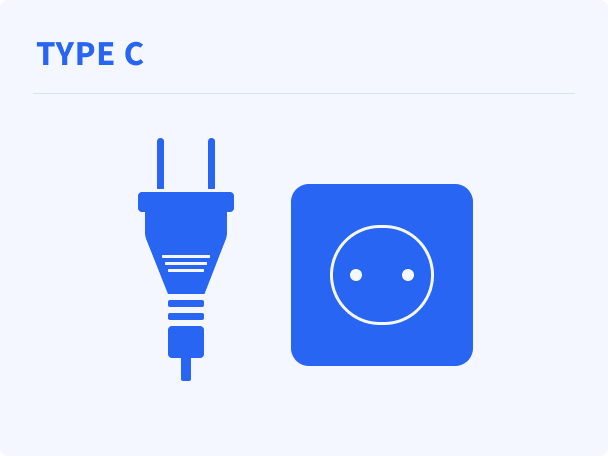
Type C has two round pins and is widely used across Europe. In Peru, it is commonly found in newer accommodations and some modern buildings. It is usually used for chargers, travel electronics, and devices brought by international visitors.
Now that you know whether you need an adapter for Peru or not, here’s a quick list of brands you can consider.
This international travel adapter includes interchangeable Type A, C, G, and I plugs, with Type A suitable for use in Peru, depending on the outlet. It features one AC outlet, two USB-C ports, and two USB-A ports, allowing you to charge up to five devices simultaneously.
This all-in-one travel adapter includes Type A, B, G, and I plugs, with Type A and B compatible for use in Peru. It features one AC socket, four USB-A ports, and one USB-C port, allowing you to charge up to six devices simultaneously.
It also comes with a 30-day money-back guarantee and a two-year limited warranty with replacement support.
Not always. Peru runs on 220V at 60Hz, so the main thing to check is whether your device can handle that voltage. Many modern electronics, such as phones, laptops, tablets, and camera chargers, are dual voltage (100–240V), which means they usually work in Peru without a converter. You may only need a plug adapter depending on the socket type.
Travelers from the US or Canada should be more careful, since both countries commonly use 120V. Items like hair dryers, electric shavers, and older appliances may need a voltage converter if they are not dual voltage.
If you are visiting from the UK, Europe, or Australia, your devices are often designed for 220–240V systems, so a converter is usually unnecessary. In many cases, you only need to check whether your plug fits Peru’s outlets.
A quick look at your device label before packing can help you avoid damage or charging issues.
You can choose from four ways to stay connected in Peru: roaming, eSIM, SIM card, and pocket WiFi.
With data roaming, you can use your home mobile plan while traveling in Peru. Depending on your provider, this may include data, calls, and texts through pay-as-you-go rates or travel passes. Verizon roaming and AT&T roaming offer different options when traveling to Peru.
An eSIM for Peru is one of the most convenient ways to get internet. You can buy a plan online, install it before your trip, and activate it upon arrival. Many eSIM providers also let you top up online if needed. Popular options for Peru include Holafly for unlimited data and Orange Travel for plans with data, calls, and texts.
A Peru SIM card is often a budget-friendly option, especially for longer stays. You can buy a SIM card at the airport or from official carrier stores after arrival. Providers such as Claro and Movistar offer prepaid tourist-friendly plans. You will usually need to show your passport when purchasing.
A pocket WiFi is a portable hotspot device that gives internet access to multiple devices at once. It can be useful for groups or travelers carrying several devices. Providers such as Wifio and MIOWIFI offer rentals with pickup or delivery to airports, hotels, or accommodations. Keep in mind that you will need to carry the device and recharge its battery regularly.
While you’re here, check out the other plug types used in tourist destinations around the world. Plus, see how each plug looks in the image after the table.
| Plug Type | Destinations |
| Type A | US, Canada, Mexico, Japan |
| Type B | US, Canada, Honduras |
| Type C | South Korea, Germany, Italy, Spain, Thailand, Iceland |
| Type D | India, Nepal |
| Type E | France, Belgium, Poland |
| Type F | Georgia, Germany, Netherlands, Spain, Indonesia |
| Type G | UK, Cyprus, Singapore, Hong Kong, Ireland |
| Type H | Israel |
| Type I | Australia, New Zealand, China |
| Type J | Switzerland |
| Type K | Denmark |
| Type L | Italy |
| Type M | South Africa |
| Type N | Brazil |
| Type O | Thailand |
Peru mainly uses Type A, Type B, and Type C plugs. If your device uses one of these plug types, you may not need an adapter. Travelers from countries using different plugs, such as the UK or Australia, will usually need one.
Partly. Peru commonly uses Type A and Type B, the same plug types used in the US. However, some outlets in Peru also use Type C, so compatibility can vary by location.
A Peru adapter depends on your home country’s plug type. Most travelers need an adapter that converts their plug to fit Peru’s Type A, B, or C sockets. These are usually compact travel adapters with flat or round pin outputs.
No. The UK uses Type G plugs, while Peru mainly uses Type A, B, and C. UK travelers will usually need a plug adapter.
Mostly yes. Canada uses Type A and Type B, which are common in Peru. Canadian travelers may be able to plug in directly in many places.
Peru’s standard voltage is 220V at 60Hz. If your device only supports 120V, you may need a voltage converter. Many modern chargers support 100–240V, which means they can be used safely with only a plug adapter if needed.
Machu Picchu and nearby areas generally follow Peru’s national standard of 220V at 60Hz.
Yes. Peru uses a standard voltage of 220V and a frequency of 60Hz.

The best global eSIM provider
From $2.3/week
A reliable eSIM provider for budget travelers
From $2.4/week
The best global eSIM provider
From $2.3/week
A reliable eSIM provider for budget travelers
From $2.4/week
Our mission is simple: to make sure you never have to ask, “What’s the WiFi password?” again. All our tips come straight from personal experience — because we’d never recommend something we haven’t put to the test ourselves.
Reviews