
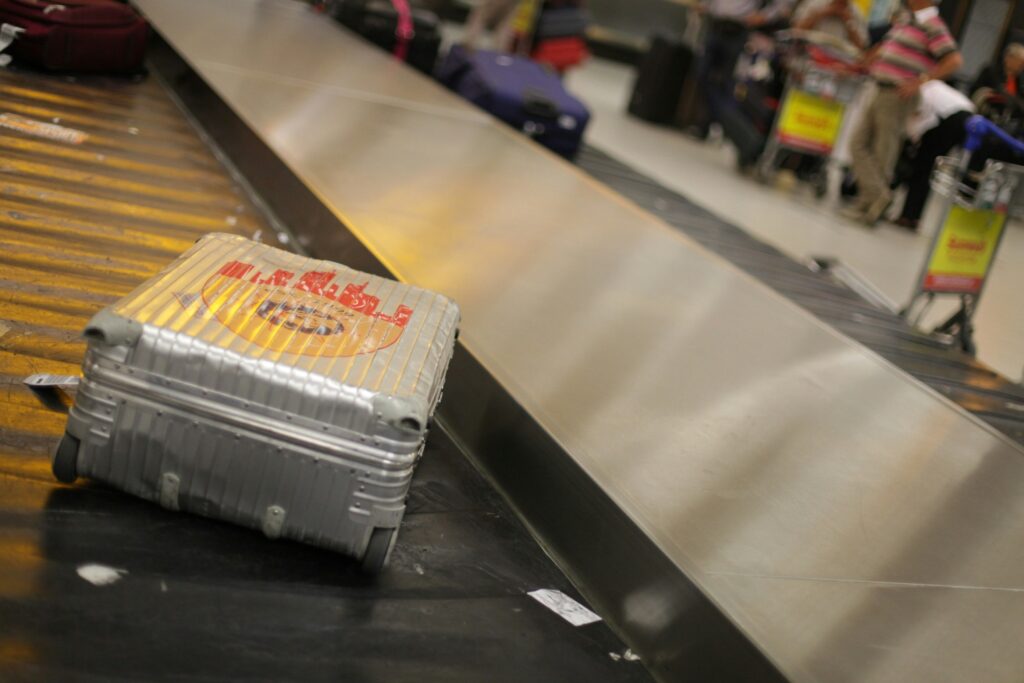



A baggage tag is supposed to help airlines track checked luggage. However, Canadian authorities are warning travelers about a baggage tag switching scam that can connect passengers to luggage that’s not theirs.
The scheme involves attaching a traveler’s baggage tag to a different suitcase. In several reported cases, authorities linked passengers to luggage containing illegal drugs after the tags were allegedly switched during airport handling operations.
Every checked suitcase receives a baggage tag that links it to a specific traveler and flight itinerary. According to Canadian authorities, criminals may exploit this system by removing a baggage tag from one suitcase and attaching it to another.
If the second bag contains prohibited items, authorities may initially believe it belongs to the traveler whose information appears on the tag. As a result, a passenger can become associated with luggage they never packed, checked, or handled.
The warning follows a W5 investigation that uncovered at least 17 Canadian cases of baggage-tag switching over the past year.
One of those cases involved a 66-year-old Toronto woman identified as Grace. According to W5, Grace traveled from Toronto to Manila via Hong Kong last summer when authorities at Manila’s airport arrested her on drug smuggling charges. Officials alleged that a suitcase linked to her baggage tag contained 24 kilograms of methamphetamine.
Grace maintained that the luggage was not hers, and she spent 24 days in jail before authorities determined she was not responsible for the drugs.
Other reported cases involved Canadian travelers detained in Japan, Mexico, New Zealand, and Germany after baggage tags were allegedly switched onto luggage containing illegal drugs. In each case, the passengers said the bags did not belong to them.
A baggage tag serves as one of the primary ways airlines and authorities identify luggage ownership.
When prohibited items are discovered inside a suitcase, investigators may initially focus on the traveler connected to the baggage tag. Even if authorities later determine that the passenger was not involved, the process can still result in questioning, delays, and legal complications.
Authorities recommend paying close attention to checked luggage throughout the travel process. Travelers should verify that the information on their baggage receipt matches their flight details and destination, keep baggage claim receipts until they collect their luggage, and inspect their bags after arrival.
Some travel experts also recommend taking photos of checked luggage before departure. These photos can help travelers identify their bags and provide documentation if questions arise later.
If a suitcase appears unfamiliar or does not match the luggage originally checked, travelers should notify airline staff immediately and seek assistance before leaving the airport.
Baggage tag switching isn’t the only scam travelers should be aware of. Watch out for fake QR codes and online shopping scams while traveling.

The best global eSIM provider
From $2.3/week
A reliable eSIM provider for budget travelers
From $2.4/week
The best global eSIM provider
From $2.3/week
A reliable eSIM provider for budget travelers
From $2.4/week
Our mission is simple: to make sure you never have to ask, “What’s the WiFi password?” again. All our tips come straight from personal experience — because we’d never recommend something we haven’t put to the test ourselves.
Reviews