


If you’re traveling from the United States, you’ll need a plug adapter, and in some cases, a voltage converter for certain devices. It’s something I didn’t really think about until I actually needed to charge my phone.
What stood out to me is how inconsistent it can be. You might find different outlet types even within the same hotel or building, especially in older or renovated places, which is usually when a universal adapter becomes the safer choice.
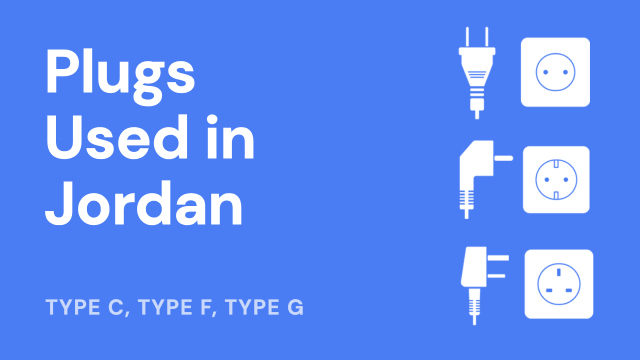
Jordan uses a mix of plug types, depending on the building, hotel, or region. The most common are Type C, F, and G, but you may also encounter Type D and J in some places.
It is not unusual for different rooms or properties to have different outlets, especially in areas where electrical systems have been updated over time.
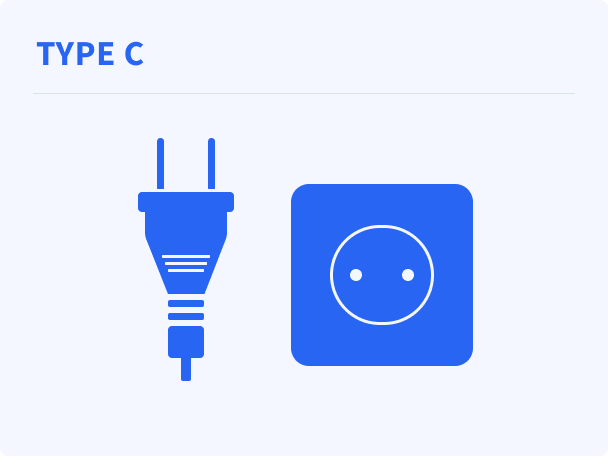
Type C has two round pins and is widely used across Europe and parts of the Middle East. It is common in hotels and older buildings in Jordan.
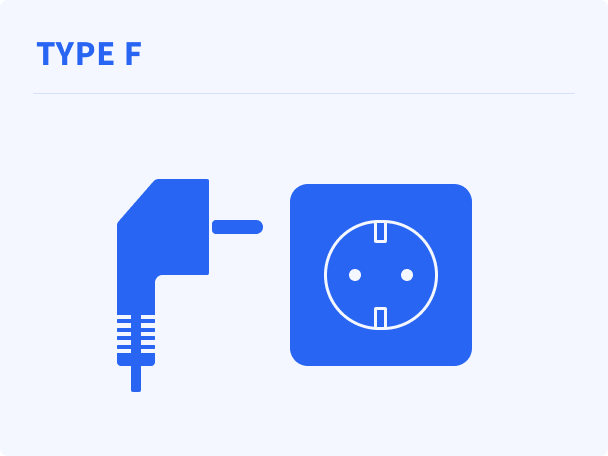
Type F is similar to Type C but includes grounding clips on the sides. It is commonly used in newer buildings and supports higher-powered devices.
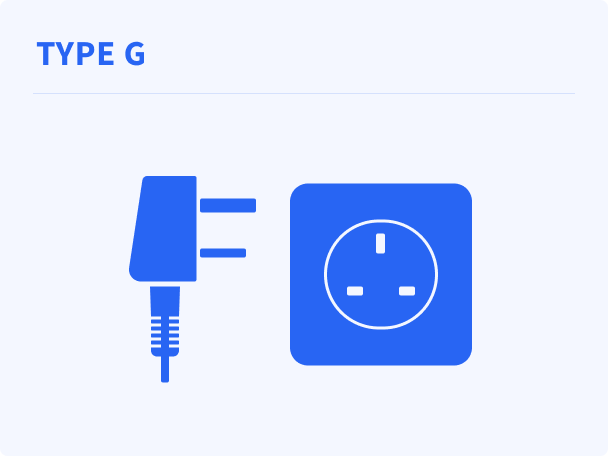
Type G has three rectangular pins and is the standard plug used in the UK. Some hotels and modern properties in Jordan include these outlets.
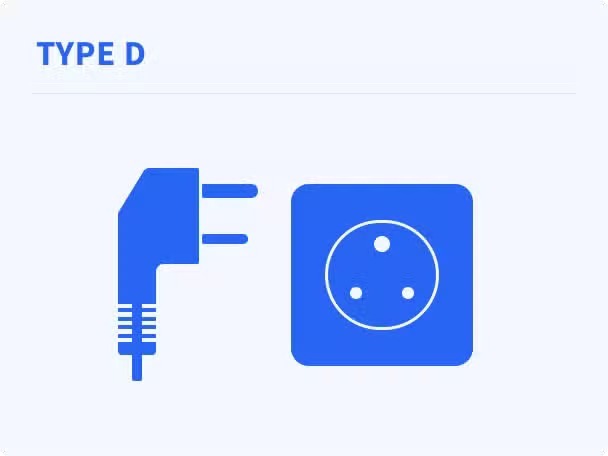
Type D has three round pins arranged in a triangular pattern. It is less common but still appears in some older installations.
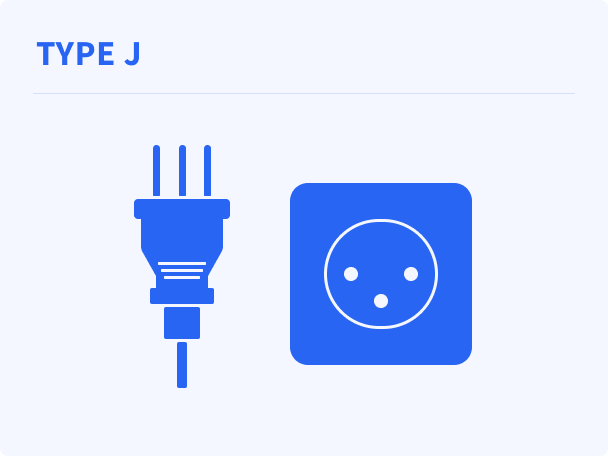
Type J is similar to Type C but includes a grounding pin. It is rare but can occasionally be found in certain buildings.
From what I’ve found, the easiest way to get an adapter for Jordan is to buy one online before your trip. Amazon usually has the widest range of options, and it’s much more convenient than trying to find one after you arrive.
Below are some adapters I’d recommend that work well with Jordan’s mixed plug types.
The Ceptics adapter is designed for travel across the Middle East, including Jordan, and supports plug types C, G, and H, which cover most outlet variations you may encounter. It allows you to charge multiple devices at once, making it practical for phones, laptops, and other everyday electronics while traveling.
It is compact and reliable, but keep in mind it is not a voltage converter, so it only works with dual-voltage devices.
This HAOZI universal travel adapter works in over 150 countries, including Jordan, with built-in US, UK, EU, and AU plug options. It is a flexible option if you travel often and want something that works across multiple regions without needing separate adapters.
It is a convenient all-in-one option for small electronics, but like most adapters, it does not convert voltage and should only be used with dual-voltage devices.
This FOVAL adapter is a step-down voltage converter, which makes it useful in Jordan where the voltage is 230V. It converts power to 110V, allowing you to safely use U.S.-only devices like hair tools or small appliances that are not dual voltage.
It is bulkier than standard adapters, but it is a practical option if you need voltage conversion, not just plug compatibility.
It is best to bring an adapter before your trip. While you can find them in airports or electronics shops in Amman, availability can be inconsistent outside major areas.
Jordan operates on 230V and 50Hz, which is higher than the U.S. standard of 120V.
If you are coming from the United States, most modern electronics like phones, laptops, and camera chargers will work without a converter because they support dual voltage. However, appliances like hair dryers, straighteners, or electric shavers may require a voltage converter.
If you are coming from the UK or Europe, you typically do not need a voltage converter, since the voltage is the same.
Staying connected in Jordan is pretty straightforward, but I’ve noticed the best option really depends on how you travel. I usually choose based on what matters more, convenience or cost.
Roaming is the easiest because you can use your phone right away, but it adds up fast. Most U.S. carriers like Verizon or AT&T charge around $10 per day, which can feel expensive after a few days of use.
eSIM is usually the most convenient option, especially if you want to set everything up before you even land. Providers like Holafly (best for unlimited data) and Ubigi let you activate a plan in minutes, so you’re connected as soon as you arrive.
Local SIM cards are easy to find at the airport or in shops around the city, and they’re usually cheaper than roaming. The main SIM card providers in Jordan you’ll see are Zain, Orange, and Umniah, all of which offer decent coverage and tourist-friendly data plans.
You’ll typically need to show your passport during purchase, and setup can take a few minutes, but once it’s done, you’ll have reliable data for getting around, booking rides, or navigating maps.
Pocket WiFi is a good option if you’re traveling with a group or using multiple devices. It works well, but carrying and charging an extra device can be a bit inconvenient throughout the day.
There are over a dozen plug types used worldwide, and no single standard applies across all countries.
Because of that, I personally prefer bringing a universal adapter so I don’t have to worry about compatibility in different destinations.
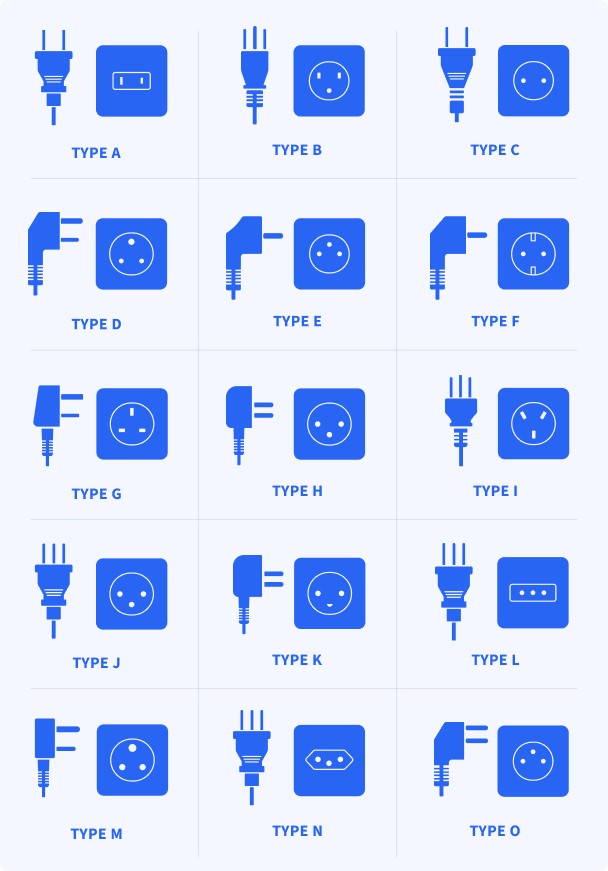
Jordan is less standardized than most countries and uses a mix of plug types, most commonly Type C, F, and G, along with less frequent types like D and J.
| Country | Plug Type |
| Jordan | C, D, F, G, J |
| United States | A, B |
| United Kingdom | G |
| France | C, E |
| Germany | C, F |
| UAE | G |
| Turkey | C, F |
No, Jordan does not use the same plug types as the United States. You will need a plug adapter to use U.S. devices.
Partially, since Jordan sometimes uses Type G plugs, which are standard in the UK. However, not all outlets are compatible, so an adapter is still recommended.
No, Canada uses Type A and B plugs, which are not standard in Jordan. A plug adapter will be required.
Partially, as Jordan commonly uses Type C and F plugs, which are also used in many European countries. However, it is not fully standardized, so compatibility is not guaranteed.
Jordan uses a mix of plug types, but the most common have two round pins (Type C and F) or three rectangular pins (Type G). The exact outlet you encounter can vary depending on the building.

The best global eSIM provider
From $2.3/week
A reliable eSIM provider for budget travelers
From $2.4/week
The best global eSIM provider
From $2.3/week
A reliable eSIM provider for budget travelers
From $2.4/week
Our mission is simple: to make sure you never have to ask, “What’s the WiFi password?” again. All our tips come straight from personal experience — because we’d never recommend something we haven’t put to the test ourselves.
Reviews