
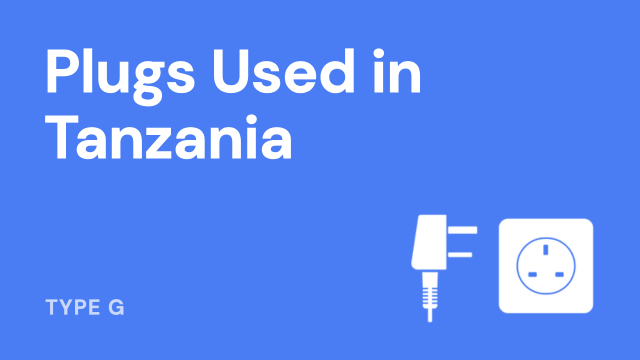


If you’re heading to Tanzania, plug compatibility is one of those small details that’s easy to overlook until you’re actually there trying to charge your phone.
In most places I came across, especially hotels and lodges, type G outlets were standard, which is the same as the UK. But what caught me off guard was that some older spots still use different sockets, so having just one specific adapter doesn’t always cover everything.
If you’re coming from the U.S. or Canada, your plugs won’t fit, so an adapter is necessary. Voltage is also higher at 230V, which usually isn’t an issue for phones or laptops, but it’s something to keep in mind for anything that generates heat.
Tanzania isn’t as mixed as some countries like Jordan, but it’s not fully uniform either. Type G is the one you’ll see most often, especially in places geared toward travelers.
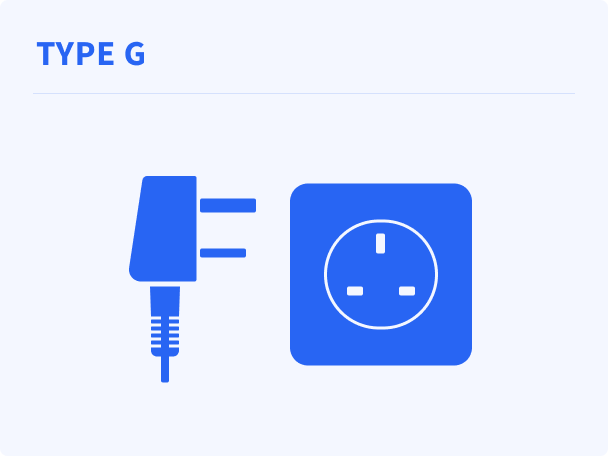
This is the same three-rectangular-pin plug used in the UK. It’s what I saw most consistently in hotels, safari lodges, and newer buildings.
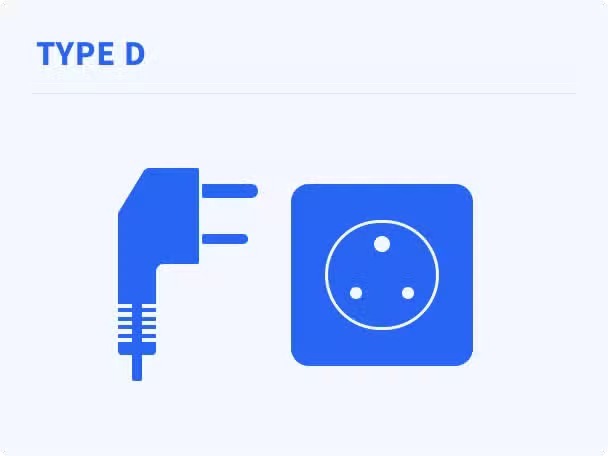
Type D has three round pins in a triangle shape. It’s less common, but you may still run into it in older buildings or less modern setups.
I usually don’t risk buying adapters after landing, especially in places where availability can be hit or miss outside major cities.
It’s much easier to grab one online beforehand, and Amazon tends to have the most reliable options.
The Ceptics African travel adapter set is designed for use across multiple countries, including Tanzania, and supports several plug types you may encounter. It comes as a 3-pack, which is useful if you want extras or are traveling with multiple devices. It works well for everyday electronics like phones and laptops, as long as they support dual voltage.
The VINTAR universal travel adapter is a flexible option if you’re traveling to Tanzania or multiple countries with different plug types. It comes with detachable plugs, so you can switch between regions without carrying multiple adapters. It also lets you charge several devices at once, which is useful if you’re traveling with a phone, laptop, and other electronics.
The TESSAN Type G adapter is a practical choice for Tanzania since it matches the most commonly used plug type there. It comes as a 2-pack, which is helpful if you want a backup or need to charge devices in different spots. It also works well if you’re carrying multiple electronics, since it expands a single outlet into several charging options.
Tanzania runs on 230V, which is higher than what you get in the U.S.
For most devices like phones, laptops, and cameras, this isn’t something you’ll notice since they’re already dual voltage. Where it does matter is with things like hair dryers or straighteners, which may not work properly or could overheat.
If you’re coming from the UK or Europe, voltage won’t be an issue at all.
Staying connected in Tanzania is pretty manageable, but I found that what works best really depends on how you travel and how much data you actually need. Most people end up choosing between four main options.
Roaming is the easiest option since your phone just works when you land, but I’ve found it can get expensive quickly. U.S. carriers like Verizon and AT&T, as well as UK providers like EE and Vodafone, offer international roaming plans, but pricing varies by country and plan, so it’s worth checking before your trip.
eSIM was the most convenient option for me since I could set everything up before arriving. Providers like Holafly and GlobaleSIM make it easy to get connected right away without dealing with a physical SIM. If you want to compare plans, coverage, and pricing in more detail, you can check out this guide on eSIM options for Tanzania.
Local SIM cards are usually the cheapest option, and I saw providers like Vodacom and Airel pretty much everywhere. The only downside is you’ll need your passport for registration, and it can take a bit of time depending on where you buy it. If you want a breakdown of plans, pricing, and where to get one, you can check this guide on SIM cards in Tanzania.
Pocket WiFi works well, especially if you’re sharing with a group or using multiple devices. I found it reliable, but carrying and charging an extra device throughout the day isn’t always the most convenient.
There’s no global standard for plug types, which is why this even becomes an issue when you travel. Personally, this is why I stick with a universal adapter so I don’t have to think about it every time I go somewhere new.
| Country | Plug Type |
| Tanzania | G, D |
| United States | A, B |
| United Kingdom | G |
| France | C, E |
| Germany | C, F |
| Kenya | G |
| South Africa | M, C, N |
No, Tanzania does not use the same plug types as the United States. You will need a plug adapter to use U.S. devices.
Mostly yes, since Tanzania commonly uses Type G plugs, which are standard in the UK. However, some places may still use Type D, so a universal adapter is safer.
No, Canada uses Type A and B plugs, which are not compatible in Tanzania. You will need a plug adapter.
You will mainly need a Type G plug adapter, as it is the most commonly used in Tanzania. It’s also a good idea to bring a universal adapter in case you encounter Type D outlets.
No, Tanzania plugs are different from U.S. plugs and are not directly compatible. You will need an adapter to use your devices there.

The best global eSIM provider
From $2.3/week
A reliable eSIM provider for budget travelers
From $2.4/week
The best global eSIM provider
From $2.3/week
A reliable eSIM provider for budget travelers
From $2.4/week
Our mission is simple: to make sure you never have to ask, “What’s the WiFi password?” again. All our tips come straight from personal experience — because we’d never recommend something we haven’t put to the test ourselves.
Reviews